Discussion
Loading...

Post

Log in
  • About
  • Code of conduct
  • Privacy
  • About Bonfire
Michael Hanscom
Michael Hanscom
@djwudi@tenforward.social  ·  activity timestamp 3 days ago

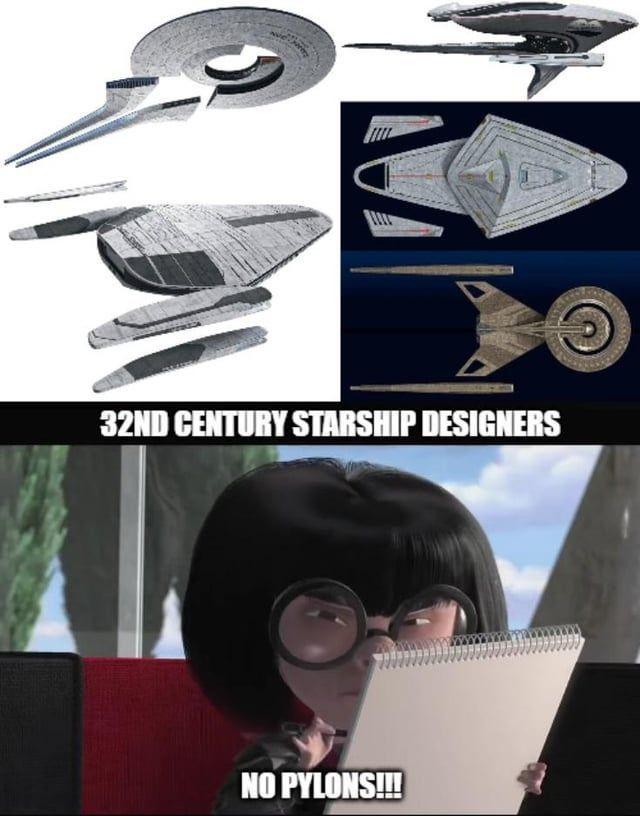
Copying a little rant I made over on Bluesky yesterday, prompted by the attached Edna Mode "No pylons!" meme: https://bsky.app/profile/michaelhans.com/post/3mdvfjk3rgk2u

Honestly, this has been bugging me ever since Discovery jumped forward. To me, it's exemplary of the "designed to look cool" mindset rather than the "designed to make some amount of (even science-fictional) sense" mindset.

Has anyone done a treknobabble deep-dive into how these designs function?

It just reminds me of how Matt Jeffries originally put a lot of thought and drew upon his aviation background to create a design that made logical sense even when depending upon technologies that didn't exist yet: https://en.wikipedia.org/wiki/USS_Enterprise_(NCC-1701)#Concept_and_initial_design

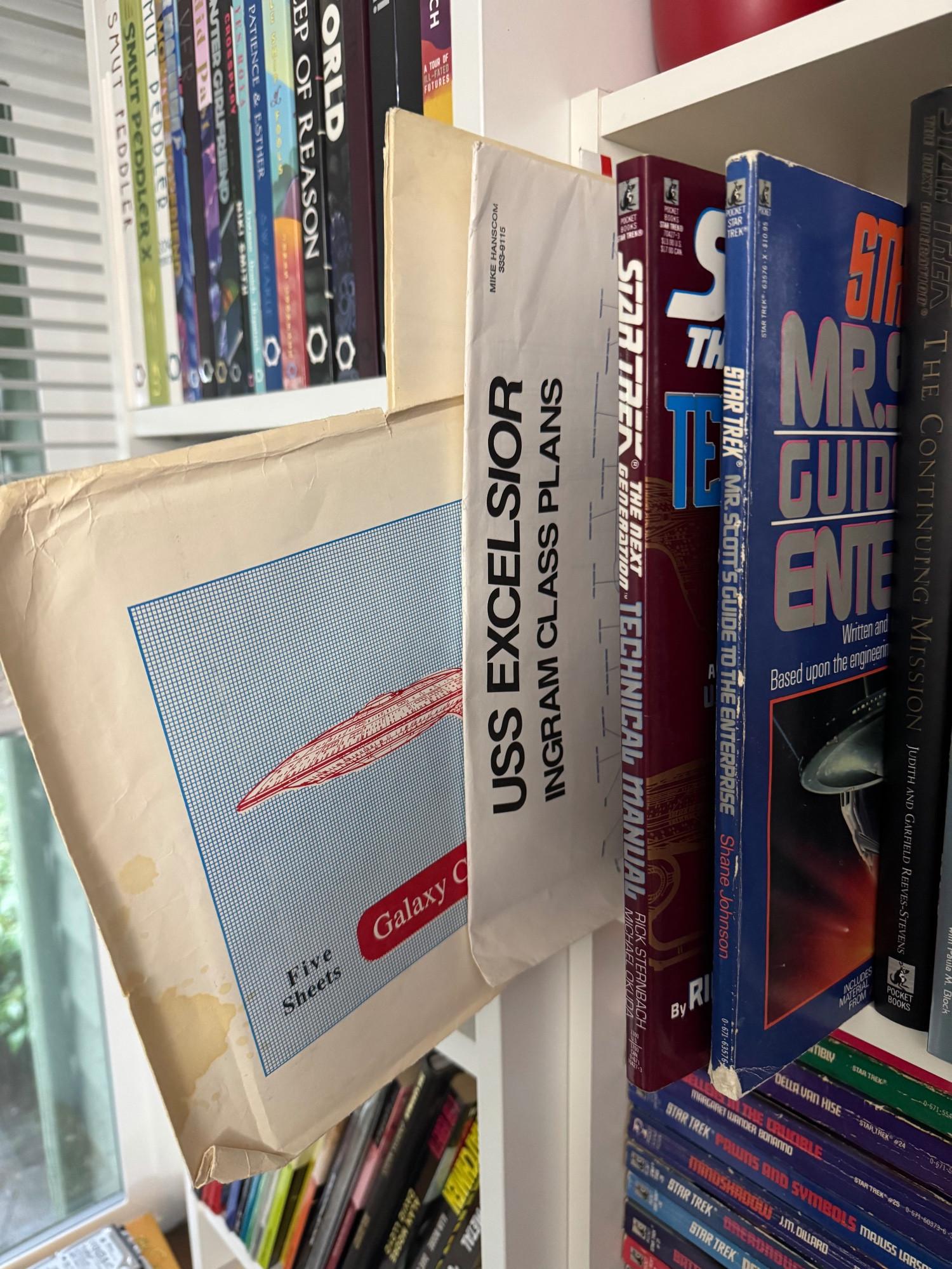
It was one of the things that really drew me into Trek when I was a kid (as evidenced by the various blueprints and technical manuals still on my bookshelves). There was a believable, logical solidity to the designs. Yes, they looked cool, but they also made sense.

These new designs with nacelles just floating near the ship don't do the same thing for me. They don't look like something that makes _sense_, they look like something that looks _neat_. It moves Star Trek away from science fiction and into the realm of the science fantasy of Star Wars.

Are there still engineering sections? Is there a centralized warp core containing and distributing the power from the dilithium crystals? We know those are still necessary for warp flight, after all, so they must be powered and managed in some way. If so, how does that power get to those nacelles?

What benefits are there to the floating nacelle design? How are they serviced, especially in emergency situations? What if the transporter isn't working (a long-standing Trek tradition, after all)? Having critical ship's infrastructure physically disconnected seems like a big potential liability.

And speaking of the transporter, that also seems to have crossed over into "magic" territory. People just blip in and out, and there doesn't even seem to be anything triggering it in most situations. I can go with the system being smart enough not to beam someone into an otherwise occupied space, but it sure seems like it would be startling to have people suddenly popping into existence at any random point and time. If I was doing something critical, I'm not sure I'd want to have a sudden *pwoof* startling me just because someone beamed in unexpectedly.

Picard's open "transporter doorways" really bugged me. There were people walking in and out of them from both directions, and yet nobody ever collided. People would constantly be bouncing off someone just coming out of or heading towards one of those portals! Those were entirely nonsensical.

I want a universe I can believe in. Things can even look cool; I'm not opposed to that! But even a far-future science fictional universe has to have some underlying logic and thought to make it believable, otherwise it's just magic without boundaries or limitations.

So, Star Trek tech geeks: What's the underlying logic and technobabble that makes these designs functionally believable? What makes them science fiction and not science fantasy?

#StarTrek #DIS #TOS #PIC #SNW #SFA #ScienceFiction #SciFi #ScienceFantasy
2 media
Meme showing five modern Star Trek ship designs with floating, detached nacelles. Under text that says "32nd century starship designers", Edna Mode from The Incredibles frowns at her sketch pad and declares, "No pylons!"
A portion of my bookshelf, with blueprints for the Enterprise-D and Excelsior, the TNG Technical Manual, and Mr. Scott's Guide to the Enterprise pulled out to be more visible.

USS Enterprise (NCC-1701) - Wikipedia

  • Copy link
  • Flag this post
  • Block
Beko Pharm
Beko Pharm
@bekopharm@indieweb.social replied  ·  activity timestamp 3 days ago

@djwudi as someone dabbling in making button boxes for more immersion: very much this. That's something that seems to happen for many shows since touchscreens are everywhere.

Personally I found especially the various force fields of Discovery a little much. It sometimes looked like every rivet came with an emitter oO

  • Copy link
  • Flag this comment
  • Block
Michael Hanscom
Michael Hanscom
@djwudi@tenforward.social replied  ·  activity timestamp 3 days ago

@bekopharm Oh, yeah. I get the appeal of touchscreens/holographic interfaces from visual (and some practical) standpoints. But I'm also someone who is quite happy when I see stories about car designs starting to move more towards physical controls rather than touchscreens. So much easier for me to adjust something by feel than to have to take my eyes off the road to fiddle with it.

I have been thinking that (within the context of the Trek universe, at least), that's more of an issue with touchscreens than with holographic interfaces, though. While it at first seems backwards (at least with touchscreens you're touching _something_), since we know that Trek's holoemitters (on the holodeck in the TNG era, and off the holodeck starting with VOY) can create tactile objects (through some integration with the transporter tech, I believe), I could see the holographic displays working much the same way. Purely display elements might be purely holographic, while interactive elements would have substance, possibly on an ad-hoc basis based on the user's hand position approaching a given control.

  • Copy link
  • Flag this comment
  • Block
Beko Pharm
Beko Pharm
@bekopharm@indieweb.social replied  ·  activity timestamp 3 days ago

@djwudi we just watched IV (the little one showed interest) and I can't get over it how different the crew interacted with the bridge controls in a so more "real" way that I almost wanted to pause to study the controls some more xD

Alien did the same.

And that's also why I love Star Wars too. Clicky clunky buttons and weirdly shaped displays. An emerging term for this is afaik Cassette Futurism and that's right up my alley :D

  • Copy link
  • Flag this comment
  • Block
Michael Hanscom
Michael Hanscom
@djwudi@tenforward.social replied  ·  activity timestamp 3 days ago

@bekopharm Alien was _so_ wonderfully physical. And I've been fascinated by how well the more modern incarnations (especially the recent series) have been integrating the very practical/industrial/70s aesthetic of the original with modern sleeker/VFX-heavy/virtual sensibilities.

While I'm no actor, it's hard for me to imagine how the actors in many modern SF shows (Trek definitely included) make their use of the holographic controls feel like they're actually using them. Physical buttons, switches, and greeblies I can see being fairly easy to develop a "I move this switch and press this button when the ship does this thing" pattern, but when you're just waving your hands around in the air in front of you, it seems like it would be far more difficult to do it consistently repeatedly, and believably.

  • Copy link
  • Flag this comment
  • Block
Beko Pharm
Beko Pharm
@bekopharm@indieweb.social replied  ·  activity timestamp 3 days ago

@djwudi most just flip the "3 magic switches" :D

Not kidding. We're basically all counting at this point and look at each other shocked when it was just 2 switches to start anything that is more complex than a car :D

  • Copy link
  • Flag this comment
  • Block

BT Free Social

BT Free is a non-profit organization founded by @ozoned@btfree.social . It's goal is for digital privacy rights, advocacy and consulting. This goal will be attained by hosting open platforms to allow others to seamlessly join the Fediverse on moderated instances or by helping others join the Fediverse.

BT Free Social: About · Code of conduct · Privacy ·
Bonfire social · 1.0.1 no JS en
Automatic federation enabled
Log in
  • Explore
  • About
  • Code of Conduct