Gouache in my sketchbook
#kons_spons #konstrukto_spons #gouache #sketchbook #insectart #art #MastoArt
Gouache in my sketchbook
#kons_spons #konstrukto_spons #gouache #sketchbook #insectart #art #MastoArt
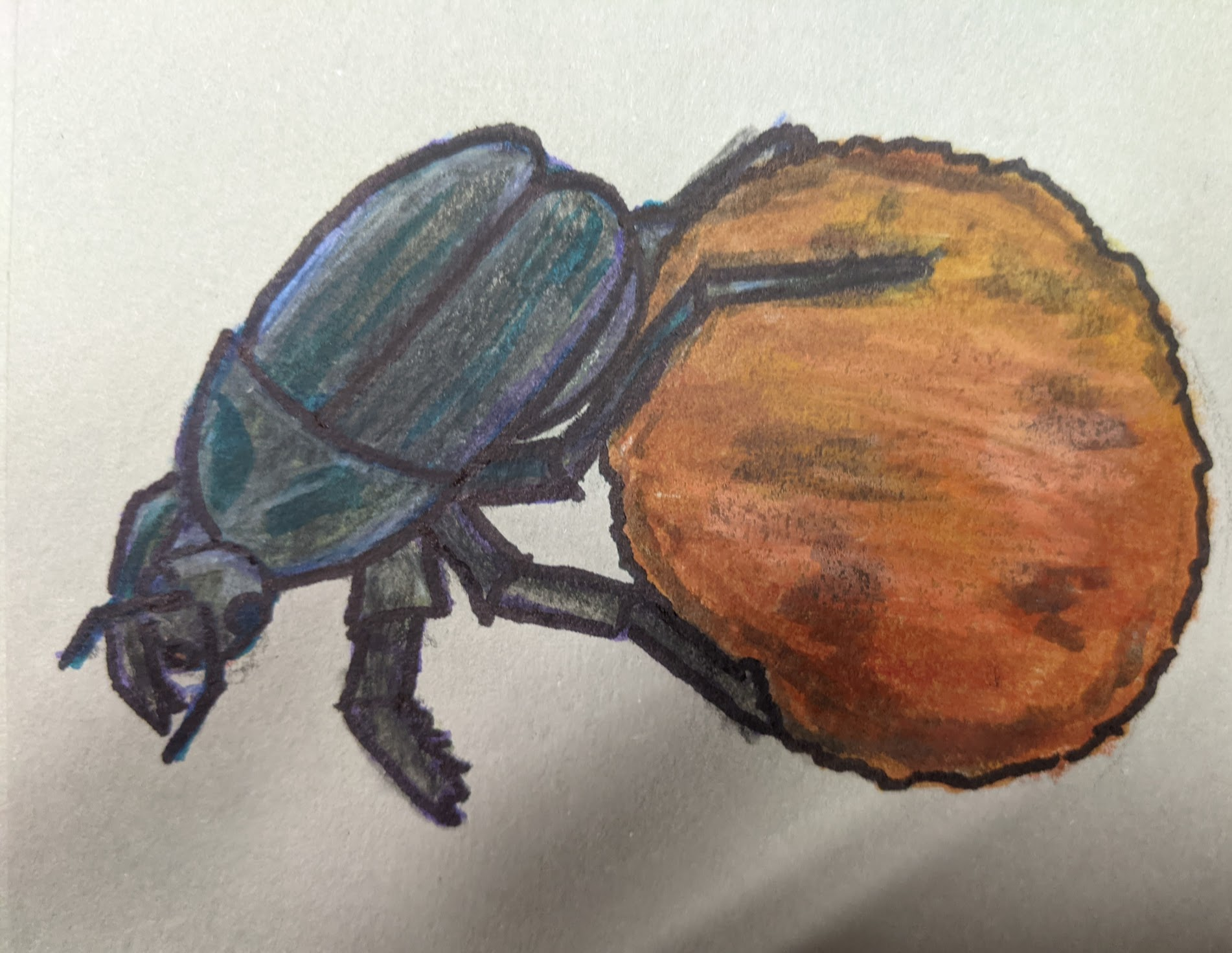
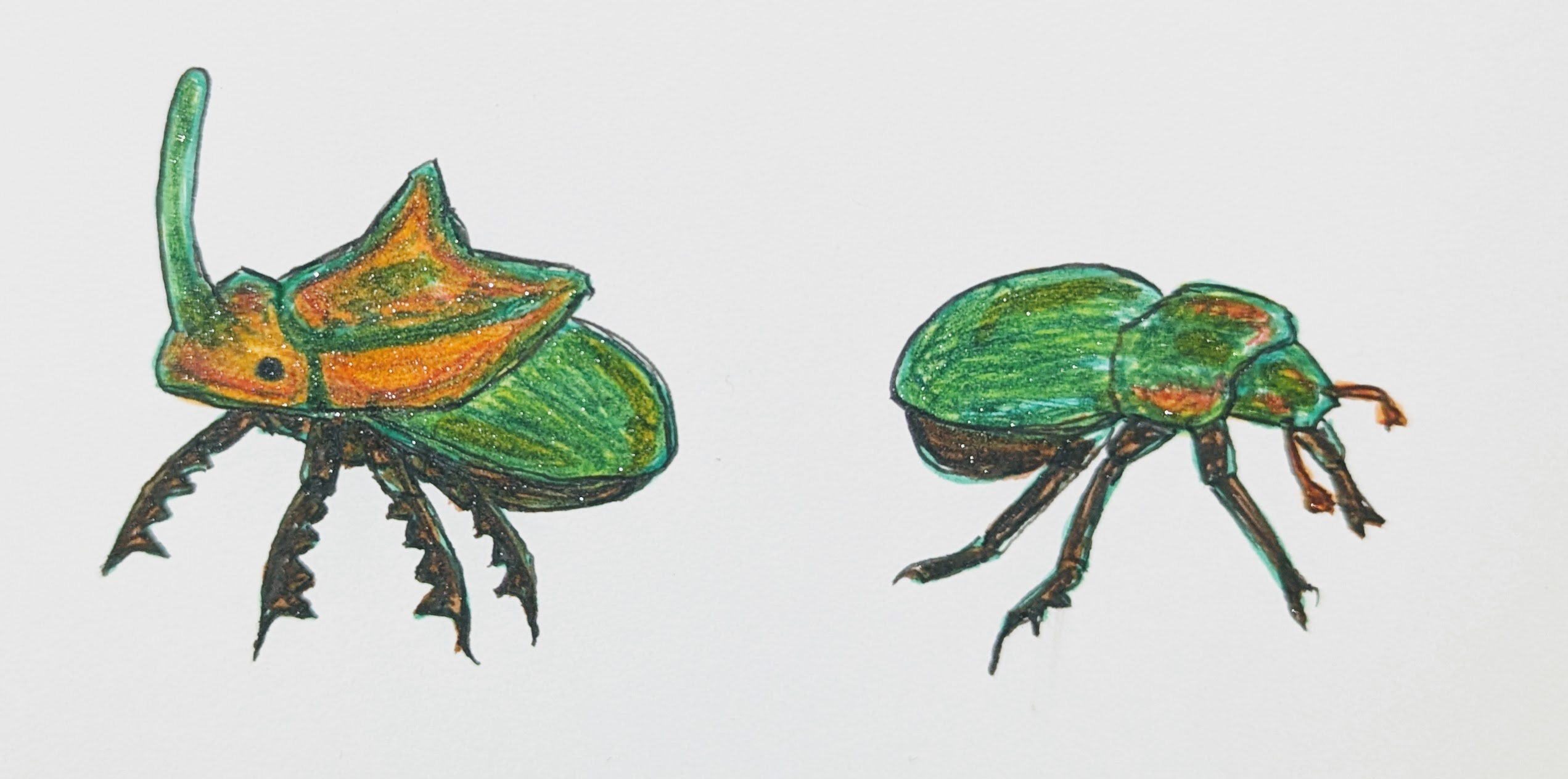
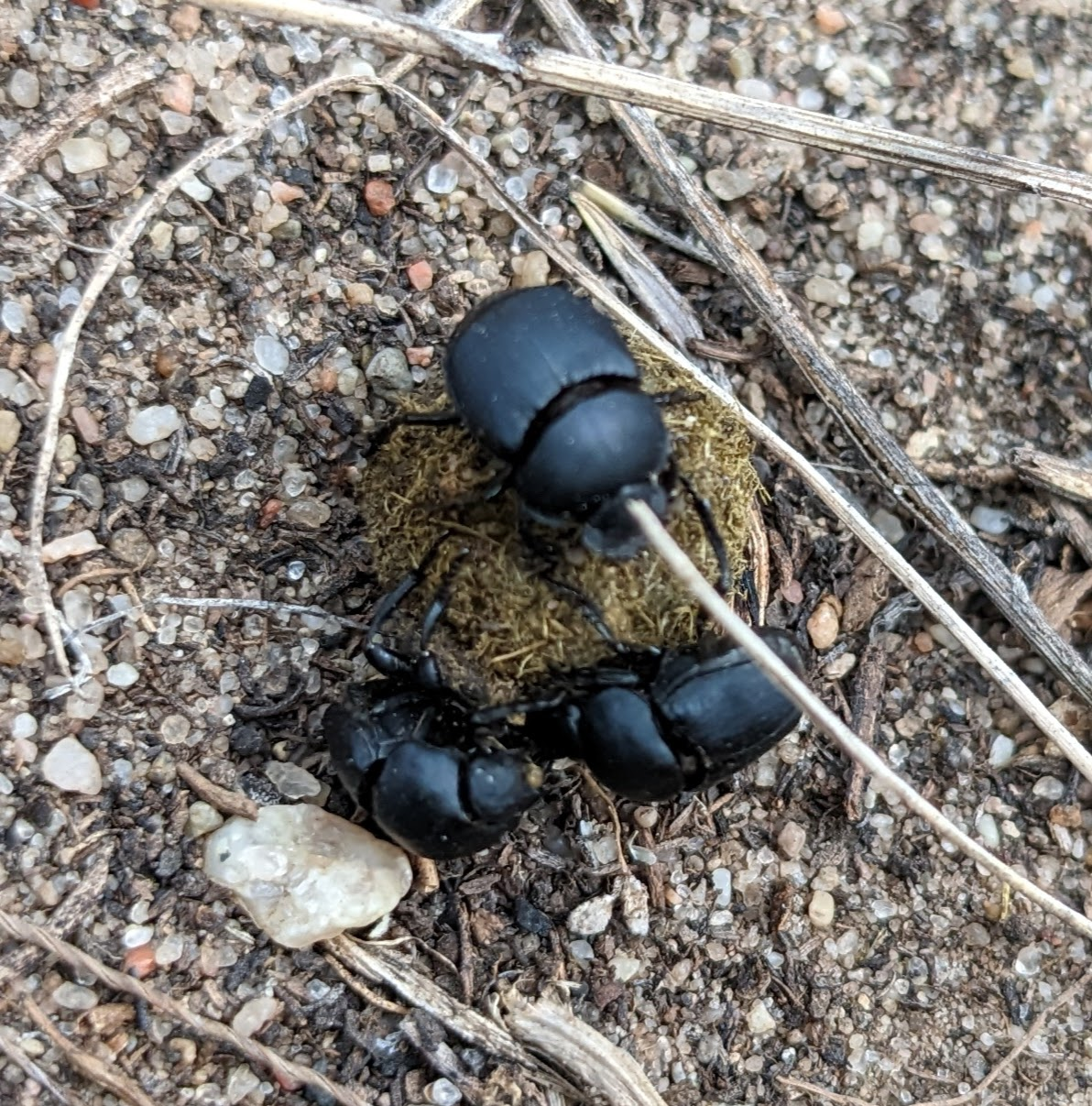
For this last day of #GoblinWeek, I have what are probably the most important goblinsects of all time: Dung beetles. Because I skipped yesterday (fuck ICE), I'm giving you two different drawings, plus a picture from my old yard!
All dung beetles are in the superfamily Scarabaeoidea, but represent several different families. They serve many vital ecological functions, including waste disposal and sanitation, nutrient recycling, and seed dispersal. Adults bury waste in the soil to create nests for their brood, which eat the poop, breaking down the nutrients to recycle back into the soil. By removing the waste from the surface, they are crucial for preventing disease spread, and while forming the dung balls they move around any undigested seeds located in the waste.
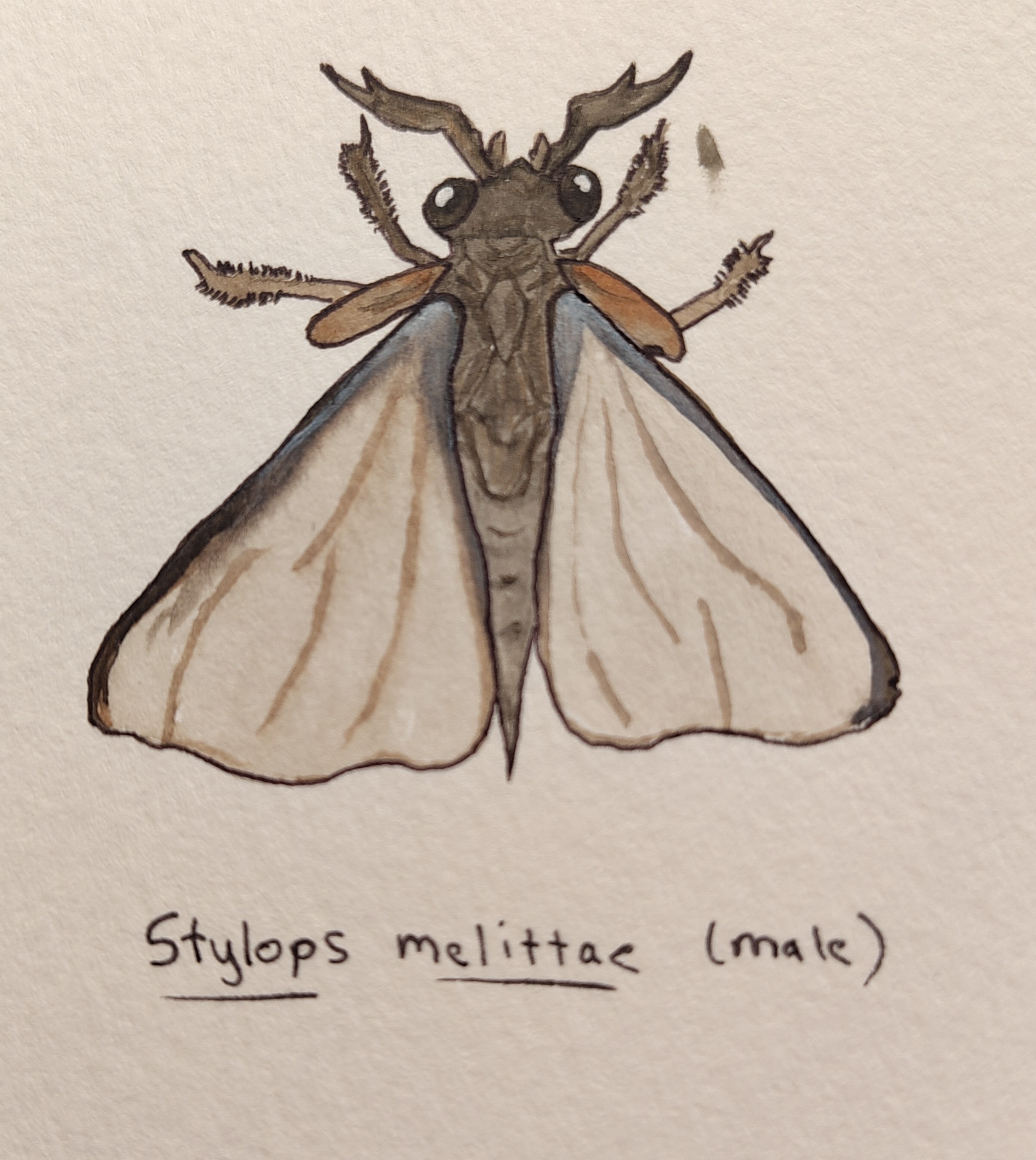
I claim to like bee butts, but not nearly as much as this guy - Stylops melittae is a twisted wing fly, also known as a Fächerflügler, a parasite of Andrena sand bees. This painting is of a male - females retain their pupal form and live most of their lives within their host, who survives the ordeal, albeit greatly subdued. The female's head partially sticks out from between the bee's abdominal segments, releasing a pheromone that attracts males. The larvae hatch inside the female's body, where they consume their mother from within before emerging through the head. The still living host bee then scatters the mobile larvae around flowers, where they can be picked up by unwitting foragers.
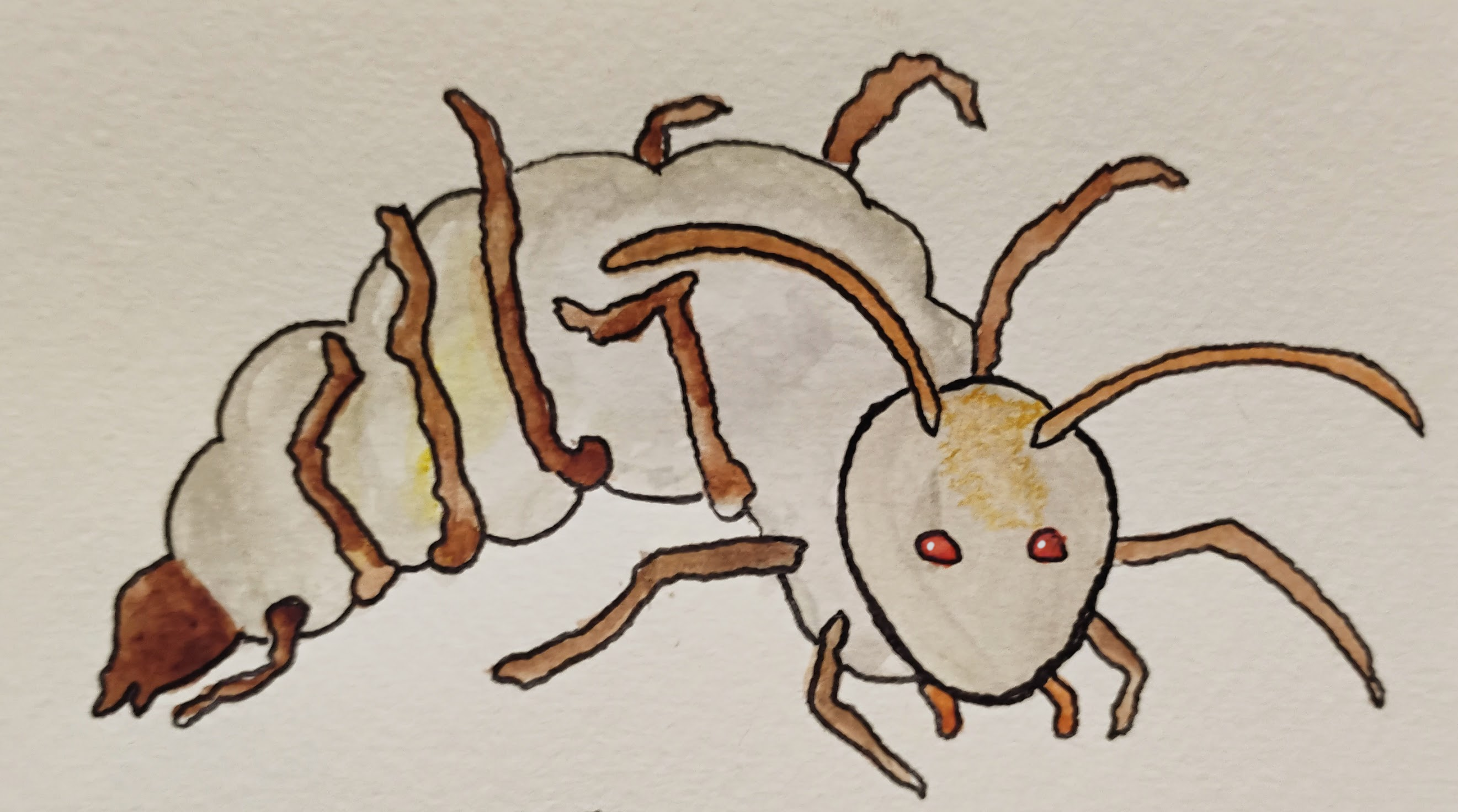
#GoblinWeek There are lots of trickster bugs out there, but this one is one of the strangest. A blowfly larva (Rhyncomya sp) has evolved to mimic termites in appearance, chemical profile, and even behavior to fully socially integrate within the nests. The long papillae imitate termite antennae, allowing for communication with multiple individuals at once. They release pheromones that are indistinguishable from the termites' scent and even partake in grooming activities. They grow fat on termite labor before pupating and flying away.
Of course, the whole thing is backwards - what looks like red eyes on its face is actually breathing holes on its butt!
For this last day of #GoblinWeek, I have what are probably the most important goblinsects of all time: Dung beetles. Because I skipped yesterday (fuck ICE), I'm giving you two different drawings, plus a picture from my old yard!
All dung beetles are in the superfamily Scarabaeoidea, but represent several different families. They serve many vital ecological functions, including waste disposal and sanitation, nutrient recycling, and seed dispersal. Adults bury waste in the soil to create nests for their brood, which eat the poop, breaking down the nutrients to recycle back into the soil. By removing the waste from the surface, they are crucial for preventing disease spread, and while forming the dung balls they move around any undigested seeds located in the waste.