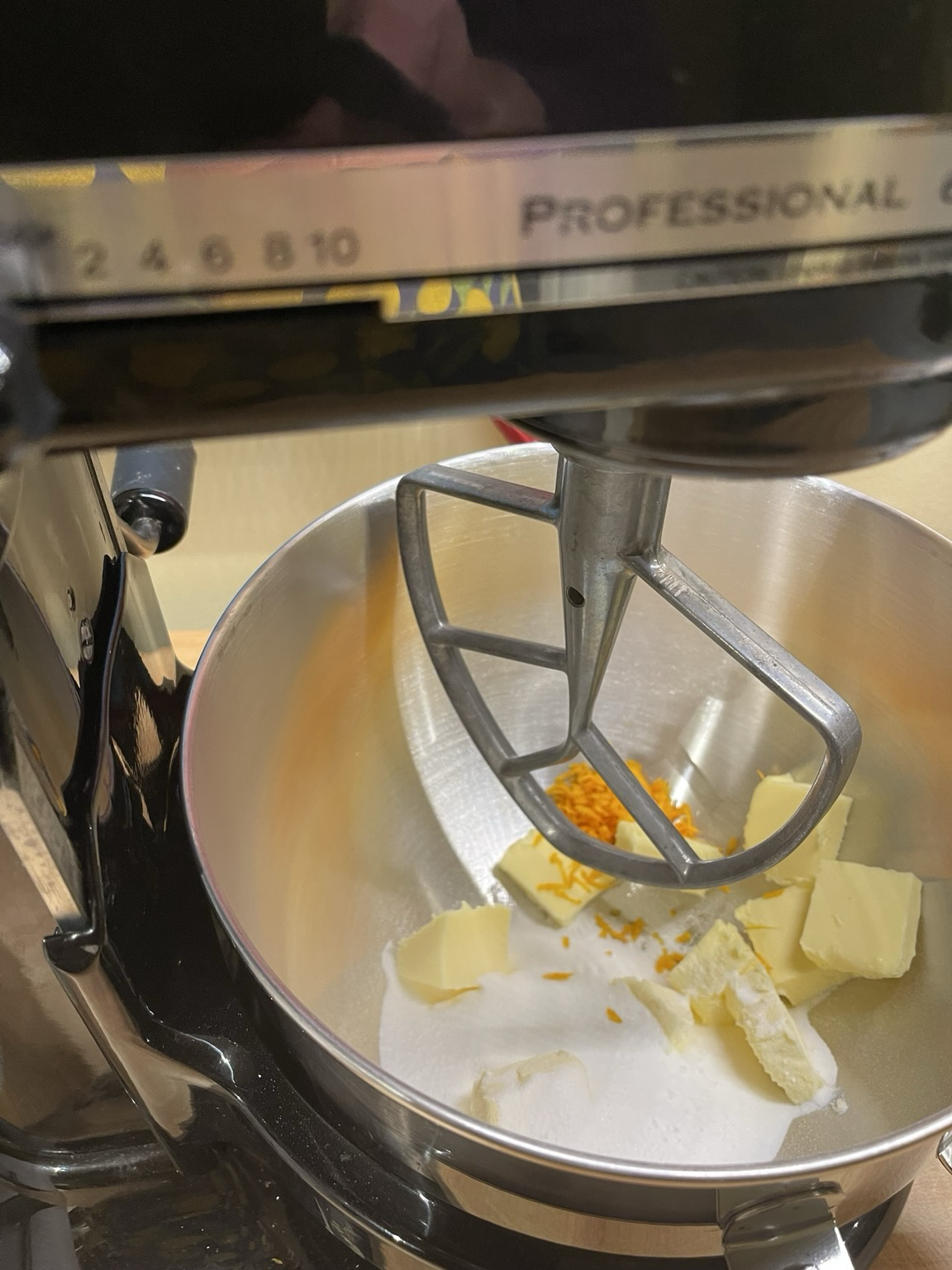
Well, the ingredients looked good going into the Kitchen-Aid stand mixer…
Discussion
Loading...
Post
Since we bake by metric weight, we’ve come to rely on the DIY weight-for-weight substitute GF flour blends from the cookbook *Gluten-free Flour Power*.
The formulas are posted on Serious Eats here:
While it’s supposedly the whole grain bread flour substitute, we find their Batch-3 blend best for all but most delicate baking. So, that’s what we went with today. (It contains dry milk powder and xanthan gum so not for everyone.)
https://www.seriouseats.com/gluten-free-flour-power-ideas-in-food
Which GF blend did you use for yours @edwiebe?
Well, the ingredients looked good going into the Kitchen-Aid stand mixer…
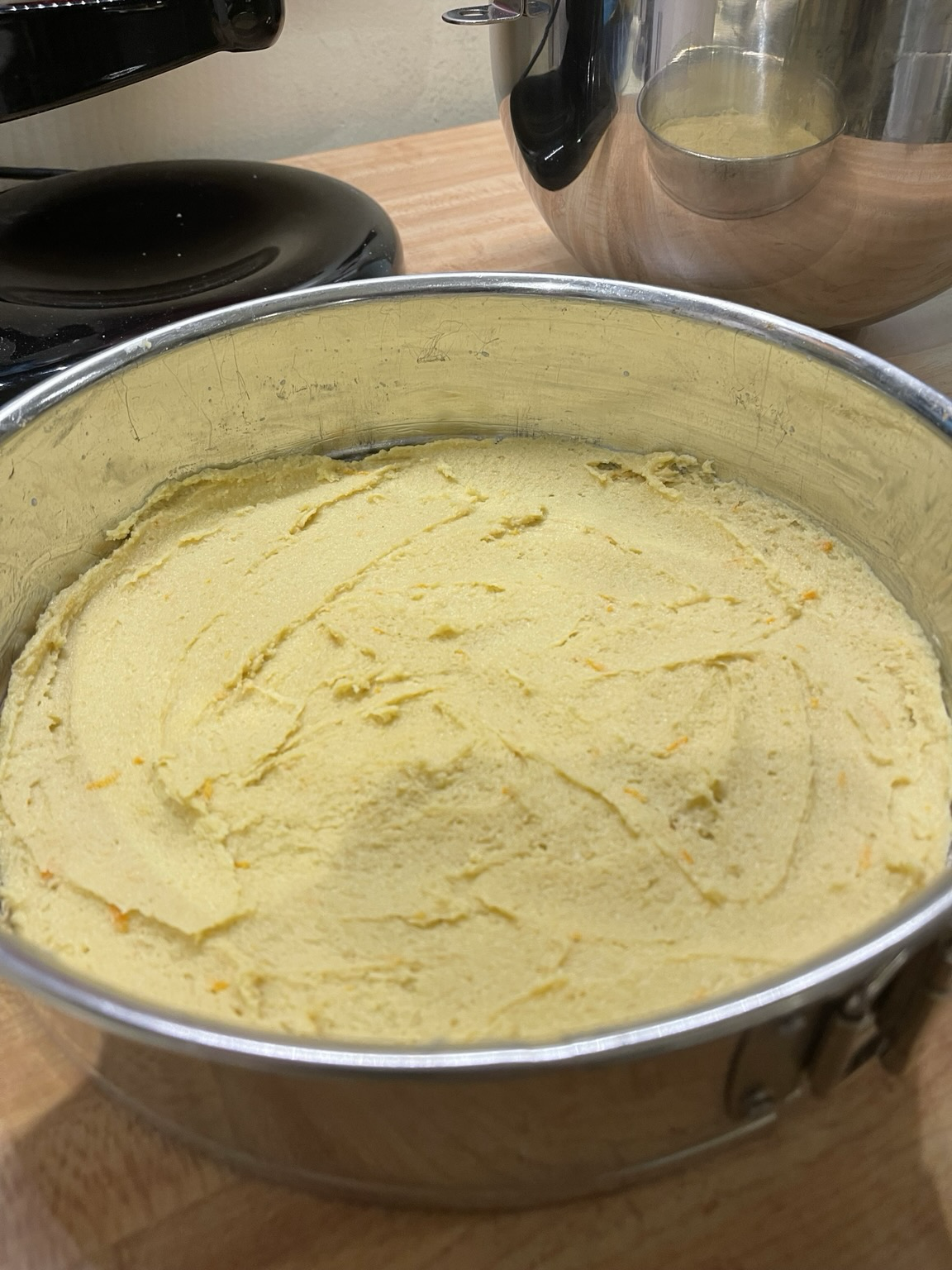
…the amount of cake batter seemed surprisingly small in relation to the large 20 cm springform cake pan.
…and the density seemed closer to cookie dough than cake batter. Perhaps we over mixed — but, ensuring that sugar is fully dissolved in GF batters with any rice flour in the mix, is always critical to avoid grittiness.
We struggled to cover the middle marmalade layer with the second half of the batter.
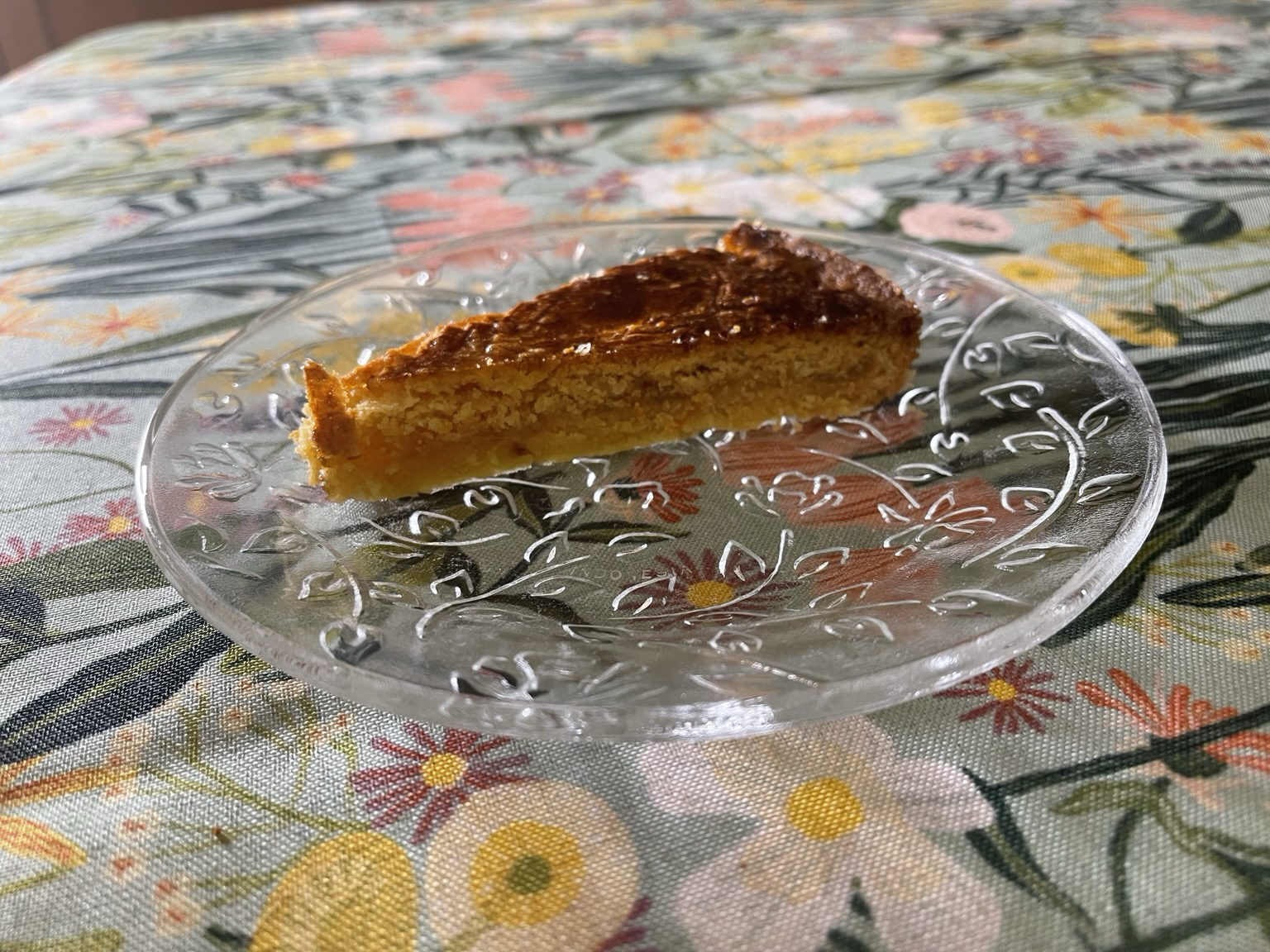
The cake turned out super thin for us. The texture wasn’t very visible.
I tried to separate it from the bottom of the pan to early and it broke on one side. Our oldest was not impressed.
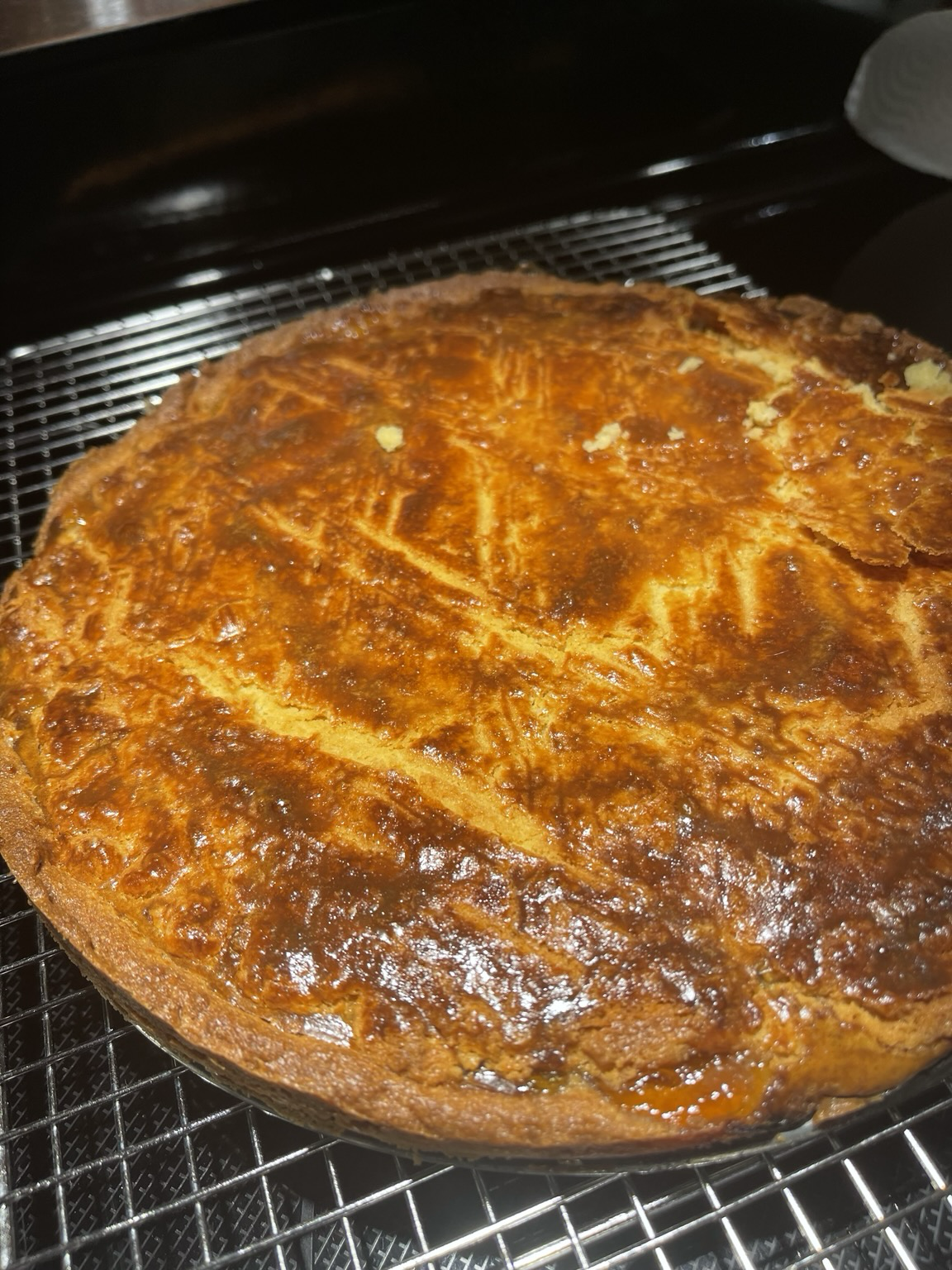
The Breton butter cake with marmalade turned out to be very tasty. It’s a ‘keeper’ recipe.
The mystery of the super thinness has been solved. I had forgotten that we’d been gifted a set of US pans at one point, and just grabbed one based on size imprinted on the bottom. Our oldest greased it and put in the parchment liner.
It was only after I’d finally got the cake off the pan that I clued in that it was actually a mislabeled 10” = 25 cm pan. 🤦🏼♀️.
Oh well, next time we’ll get it right.