#MDACF - What #Mainers are Asking About #JumpingWorms
February 25, 2026
'Following a recent two-day jumping worm workshop hosted by the Maine Department of Agriculture, Conservation and Forestry (DACF), it is clear that jumping worms are a top concern for #Maine #gardeners and land managers. This event brought together a knowledgeable lineup of leading researchers from across North America to share the latest science and management strategies.
While the first established populations in the state were discovered as recently as 2014, these invasive pests are now considered widespread and have been confirmed in 13 of Maine's 16 counties. With hundreds of questions submitted by workshop registrants, several key themes emerged regarding how to identify, manage, and prevent the spread of these invasive worms.
Identification: "Is this a jumping worm?"
Many Mainers are concerned about distinguishing jumping worms from other species of earthworms.
- Monitor with a Mustard Drench: To see if jumping worms are present at your location, mix 1/3 cup of ground mustard with a gallon of water and pour it directly on the soil (in a forested setting, brush away leaf litter first); this irritates the worms and brings them to the surface for identification.
- The Timing: Because they are annuals (having a lifespan of only one year), juveniles appear in May and June and are very small and hard to identify. It is best to wait until late July or August to confirm their identity once they develop their distinctive collar.
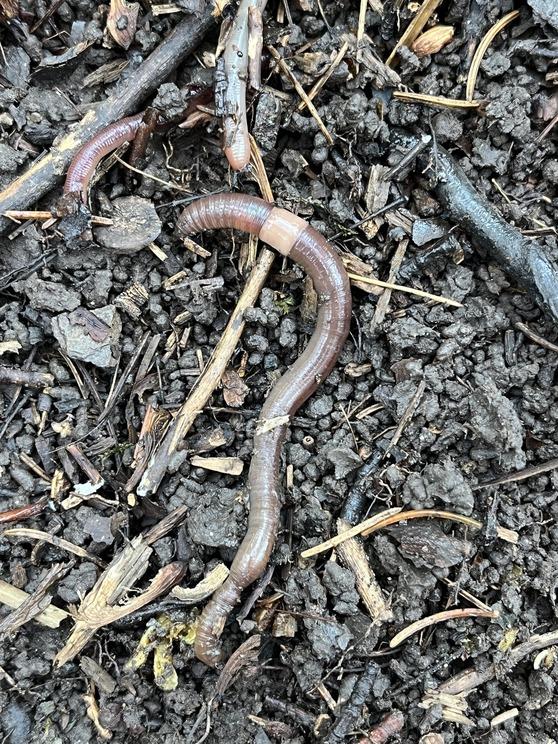
- The Look: Look for a milky white or gray collar (clitellum) that is smooth, flat, and completely encircles the body like a ring. In contrast, European earthworms have a raised, saddle-shaped clitellum that only goes partway around.
- The Behavior: Jumping worms do not crawl like typical earthworms; they thrash vigorously and wriggle like snakes when touched.
Spread & Prevention: "How do I stop them?"
The most common way jumping worms move is through human activity, particularly the movement of soil, compost, mulch, and nursery plants.
- The "Hidden" Threat: The worms themselves die each winter, but they leave behind tiny, soil-colored cocoons that are nearly impossible to see.
- Arrive Clean, Leave Clean: Cocoons can hitchhike in the treads of #HikingBoots and #tires. Using boot brushes at trailheads and cleaning tools before moving between garden beds is essential.
- Plant Sales & Nursery Stock: When possible, choose bare-root plants and rinse the roots into a bucket to ensure no cocoons are hiding in the root ball.
- Contain and Return: Always dump the wash water and mud back onto the original site where you collected the plants or soil; this ensures you aren't accidentally moving "hitchhiking" cocoons to a new, uninfested area. If you need to dispose of the material, wash your gear over a bucket to capture the sediment, let the soil settle before pouring off the water, and once the remaining mud dries, bag and #solarize it (heating it to at least 104F) before putting it in the trash.
Things you can do right now:
- #Solarization: In Maine, this works best in the peak of summer when the sun is strongest. Spread a thin layer of infested soil, about 6-8 inches deep, onto a #DarkTarp and cover it with a clear drop cloth, sealing the edges to create a "package." Place a simple soil thermometer in the center to track temperature. Research suggests reaching 104F for at least two hours can kill the worms and egg-containing cocoons. If you don't have a soil thermometer, plan to leave the covered soil in full sun for at least three days. On clear, hot summer days, a thin layer will often reach target temperatures within one to two days, but the extra time helps ensure consistent heating throughout the pile and improves your chances of success.
- Hand Removal: For small populations, you can hand-pick worms and drop them into a bucket of soapy water to kill them."
Learn more:
https://www.maine.gov/dacf/about/news/news.shtml?id=13343933
#SolarPunkSunday #Gardening #MaineGardens #Compost #NaturalPestControl #NaturalPestSolutions #InvasiveSpecies #InvasiveSpeciesWeek
#MaineDepartmentOfAgricultureConservationAndForestry