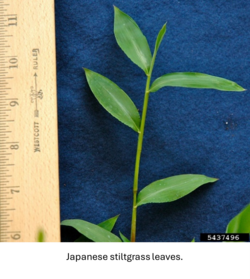
#EDRR Alert: Status Update of #Stiltgrass in #Maine
February 24, 2026
"Background
Japanese stiltgrass (Microstegium vimineum) is a severely invasive, annual grass originating from southern Asia. Originally introduced to Tennessee in 1919, stiltgrass has seen unbridled spread across the eastern United States over the past century. In Maine, stiltgrass is classified as an early detection and rapid response invasive species (EDRR). EDRR species are recent invaders, meaning they can still be feasibly eradicated from the state. A prolific seed producer, stiltgrass easily invades natural areas and outcompetes many of our native #groundcover species. Stiltgrass is also highly #allelopathic, meaning it releases organic compounds into the soil that degrade the health of the soil and inhibit the growth of other plant species.
As the growing season ends, stiltgrass stems dry out, leaving a thick layer of dry thatch along the forest floor. This introduces a severe #wildfire risk to any invaded areas. Due to the countless negative impacts that stiltgrass poses on Maine's natural areas, identifying stiltgrass populations and managing its spread is among the highest priorities for invasive species management in the state.
Identification
There are several characteristics that can be used to identify stiltgrass and distinguish this species from our native grasses in Maine. The most reliable identifying characteristic for stiltgrass can be found on its pale green, alternate leaves. On the upper surface of stiltgrass leaves is a recognizable silvery midrib (central vein running along the length of the leaf). This silver midrib is unique to stiltgrass and is not found on any of Maines native grasses. Additionally, the texture of stiltgrass leaves is extremely smooth or silky. Nearly all of Maine's #NativeGrasses possess a sticky or grippy texture when passing the leaves between your fingers.
Stiltgrass can also be distinguished from native grasses using its growth form. Mature plants produce aerial roots, or 'stilt roots' (the namesake for this species), at lower nodes along the stem that help to prop up the plant. This trait is unique to stiltgrass. Additionally, stiltgrass tends to branch out close to the ground, producing several main stems that may appear to have a sprawling growth habit. This trait is extremely uncommon among Maines native grass species."
Learn more:
https://www.maine.gov/dacf/about/news/news.shtml?id=13343932
#SolarPunkSunday #Fields #SoilHealth #NativeGrasses #InvasiveGrasses #InvasiveSpecies #InvasiveSpeciesWeek
#MaineDepartmentOfAgricultureConservationAndForestry