@JenJen@mastodon.art is running a Kickstarter for some AWESOME, nsfw, glitter stickers if folks want to support a creator on the Fediverse.
Father of two, husband, gamer, lover of free software, and willing teacher.
I reserve the right to be wrong about everything.
Founder & CEO BT Free 501(c)3 Public Charity
Donate to BT Free - https://givebutter.com/btfree
Proton Referral - https://pr.tn/ref/V1SZDGNS
Hetzner Referral - https://hetzner.cloud/?ref=X83HFgQjXhR7
Joined Dec 2025

@candide@vis.social @nicol@social.coop "turned off the sharing system" do you mean the P2P? I had that on mine by default, and while I love the idea, as well as others being able to replicate videos through Peertube, we found that it causes too many issues. You can't count on the quality of connection of anyone else and then folks pulling from flakey connections only see issues and think it's the video.
Also I was wrong about the follow. I hadn't followed open.movie on my tubefree.org. I do now though! 😄
2
@nicol@social.coop @candide@vis.social i can watch the videos without issue.
I'd always suggest federating your Peertube, for instance my TubeFree.org asked to follow yours, but I don't think it it would solve this issue.
I'm guessing a client side issue or ISP block. Maybe try a VPN or switching to cellular or WiFi.
4
ozoned
boosted

Federated End-to-End Encrypted Messaging is Coming Soon
One of the Social Web Foundation's initiatives for improving ActivityPub will soon be a reality for the network.
Support for end-to-end encrypted messaging in ActivityPub has been stated as a long-term goal by the Social Web Foundation, but the network might be gaining support for it sooner than anyone expected. Ben Pate, the lead dev of Emissary, posted to the network earlier this week:
Since January, Bonfire and Emissary have been working on true E2EE in ActivityPub, using the MLS protocol — which is a successor to Signal protocol with better support for very large groups.
Anyway, here’s today’s progress video of where I am. Here’s what works: exchanging public keys, creating groups, sending/receiving messages and replies, and realtime notifications.
There’s a lot more to do. We’re planning on general availability in June, so right now we’re about 1/3 of the way into the project.
Funding for this feature was secured through the Sovereign Tech Fund, with leadership provided by the Social Web Foundation. Emissary and Bonfire are both working on this project, and are due to provide deliverables by June 2026. The result of this work will eventually provide a clear standard in a future version of the ActivityPub protocol spec. A December 2025 draft of the existing spec can be read here.
A Quick Demo
Ben was nice enough to record a quick demo for people to get a visual representation of where things are currently, and what support for encrypted messaging looks like.
https://clip.place/w/ajgJ5Hi69bbbxHCK3nXNdj
What’s Next?
For now, implementers are working hard to iron out wrinkles and resolve outstanding points of ambiguity. The demo above already showcases a working product, although a number of client-side bells and whistles could be added for things like read receipts, native support for different content types, and autocomplete for looking up contacts.
The spec currently appears to propose an idea that client implementers could leverage end-to-end encryption through a future version of the ActivityPub API. While the proposal spec is relatively fleshed-out, it would benefit greatly from community feedback.

ozoned
boosted

Fedify 2.0.0 is here!
This is the biggest release in Fedify's history. Here are the highlights:
- Modular architecture — The monolithic
@fedify/fedifypackage has been broken up into focused, independent packages:@fedify/vocab,@fedify/vocab-runtime,@fedify/vocab-tools,@fedify/webfinger, and more. Smaller bundles, cleaner imports, and the ability to extend ActivityPub with custom vocabulary types. - Real-time debug dashboard — The new
@fedify/debuggerpackage gives you a live dashboard at/__debug__/showing all your federation traffic: traces, activity details, signature verification, and correlated logs. Just wrap yourFederationobject and you're done. - ActivityPub relay support — First-class relay support via
@fedify/relayand thefedify relayCLI command. Supports both Mastodon-style and LitePub-style relay protocols (FEP-ae0c). - Ordered message delivery — The new
orderingKeyoption solves the “zombie post” problem where aDeletearrives before itsCreate. Activities sharing the same key are guaranteed to be delivered in FIFO order. - Permanent failure handling —
setOutboxPermanentFailureHandler()lets you react when a remote inbox returns 404 or 410, so you can clean up unreachable followers instead of retrying forever.
Other changes include content negotiation at the middleware level, @fedify/lint for shared linting rules, @fedify/create for quick project scaffolding, CLI config files, native Node.js/Bun CLI support, and many bug fixes.
This release includes significant contributions from Korea's OSSCA participants. Huge thanks to everyone involved!
This is a major release with breaking changes—please check the migration guide before upgrading.
Full release notes: https://github.com/fedify-dev/fedify/discussions/580
5
ozoned
boosted

Feditext beta users: version 1.7.2 build 145 fixes an API decoding issue with media attachments that can prevent posts and timelines from loading. while this could affect any Fedi server, it was happening more frequently in the current GTS RC. that's likely to be fixed by GTS in their next RC.
also, we forgot to announce it 😅 but previous build 144 fixed the Open in Feditext share sheet action on iOS 18 and 26. it should now work for any iOS version we support (15–26).
ozoned
boosted

Some of my Mastodon friends aren’t active on here anymore, so: new #intro post to try to find more folks to follow! Hi, I’m Kila (she/they). Late 30s, disabled, neurodivergent, #queer (asexual lesbian demigirl). I live in rural #Texas where I forage and wander, and care for a lot of #cats. Avid reader, mostly of SFF #books, and also writer of speculative fiction. Other interests include fiber arts, hiking, camping, computers (I enjoy playing with Linux distros), fountain pens, BotW & TotK, etc.
1

@dreampopclub Design feature ™️
@thegiddystitcher@sunny.garden @dreampopclub@toot.cat I honestly don't even know what needs fixing here, but I do know that is beautiful whatever it's going to be.

Also not sure if I should even long post about my intention to move abroad, since I'm on a tech focused server. Don't want to bother yall but it's also such a big theme in my life atm that I don't have much else to post about 😅
@Gina@fosstodon.org I know you're on Mastodon, but can I recommend you check out Bonfire? Bonfire has MANY ways of controlling your posts. They call them boundaries. I haven't done too much with them yet, but I'm with you on the feeling of wanting to keep work and my personal life/social network life separate.
ozoned
boosted

Hello, Fediverse 👋
I'm Sophie. I run a digital ops consultancy from the south of France, working with values-led businesses.
I'm in the process of leaving Instagram, Facebook and LinkedIn. I got tired of building on platforms that sell our data, gut safety systems to please politicians, and treat people as products.
Still figuring it all out. Would love to connect.
#Introduction #EthicalSocialMedia #SmallBusiness #DeleteMeta #Fediverse #DigitalEthics

153
Hello, Fediverse 👋
I'm Sophie. I run a digital ops consultancy from the south of France, working with values-led businesses.
I'm in the process of leaving Instagram, Facebook and LinkedIn. I got tired of building on platforms that sell our data, gut safety systems to please politicians, and treat people as products.
Still figuring it all out. Would love to connect.
#Introduction #EthicalSocialMedia #SmallBusiness #DeleteMeta #Fediverse #DigitalEthics
@sophiekaz@mastodon.social welcome to the club! 😊 There are quite a few of us on the Fediverse attempting to figure out business plans to help continue funding the Fediverse.
From hosting platforms, to looking for grants, to building out services for people, to just educating.
Thank you for joining us.
There are quite a few of us on Matrix in the Fediverse Developer Network space: matrix.to/#/#fediverse-devel...
Also if you really wanna get started, could I suggest the FediForum coming up in just a few weeks. it's an unconference that's online where we discuss everything about the Fediverse. fediforum.org/
Also I'm more than happy to help discuss anything as well. I run BT Free, btfree.org, as a nonprofit attempting to figure things out as well.
😊
1
@nicol@social.coop YUP! 😊 That's the decentralized nature to this. It's all new to us, thanks to the evils of Big Tech. I'm MORE than happy to have any kind of discussion, video chat, livestream, etc. Helps me practice my Fedi Pitch and learn how best to help folks.
What I'm saying is, you have any questions, want to sit down, etc, I am here.
1
ozoned
boosted

Reimagining Fediverse Advocacy
Tackling the biggest problem of network effects: bringing people here.
I've long been an advocate for the Fediverse, or at the very least, some manifestation of a decentralized Social Web that anyone can take part in. As a whole, it is a revolutionary alternative vision to the concept of corporate social media. I wholeheartedly believe that an effort like this could change the Web.
Here's the rub: we're still not very good at advocating why people should join, or helping facilitate groups of people in their migration over here. The Fediverse, sadly, has something of a Linux problem. Fediverse advocacy often resembles Linux User advocacy, and aside from attracting some enthusiasts, doesn't often work well. Here are a few examples of what that looks like:
- "You should ditch Windows and switch to Linux, it's better and respects you as a user!"
- "Linux can do anything that Windows or MacOS can!"
- "It's so easy to use, you should totally try it!"
Cards on the table: I've been a desktop Linux user for almost 20 years at this point. I, too, have been this kind of advocate in the past, going as far as to start a petition to get Blizzard's games ported to Linux. Whether you're advocating to a person or a company, this method of outreach and advocacy just doesn't work.
Why doesn't this work?
For anyone with even a rudimentary understanding of marketing, it's pretty obvious that these kind of efforts are missing something. I can break it down into three points:
- Messaging: Generic feel-good messages about why someone should use product X instead of product Y don't generally have much of an impact. You can promise the moon and highlight flashy features, but these don't actually get people to think about why they ought to use the proposed alternative.
- Value Proposition: When it comes to offering a product to someone, it's important to understand what points are being made about the product, and what points of interest align with the person. With the Fediverse, one of our biggest mistakes has been to focus on open source, decentralization, digital sovereignty, privacy-respecting, and other similar terms. This is great for attracting nerds, but for the general population, it's useless.
- Onboarding: A lot of people will tell you to switch to something by pointing you towards an app to download, an ISO to burn, or a project page with a link to sign up somewhere. In a lot of cases, that's the extent of the help you get! You made the first move, now you're on your own. That is, unless you have an additional person with expertise to help you.
What Should We Do Instead?
In a practical sense, advocacy takes shape in many different ways, not just in the grassroots method I described. I want to break down a few principles, and follow up with some case studies where I think some promising work is happening today.
More specific messaging is better
We've established that broad-brush messaging is generally not that effective in getting new people to check out the network. You know what does work remarkably well, though? Figuring out specific groups of people that would benefit.
I'm not going to get super into the weeds here and say something corporate like "We need to design user stories that cater specifically to a bunch of demographics we've just imagined." Instead, I think we can look at the landscape of social media, and figure out a bunch of different groups of people that currently aren't having a great time on centralized social media.
A few examples
- Journalists, writers, and bloggers often find themselves struggling to stand out in an algorithmic timeline. Often, these timelines shut out smaller voices, and promote bigger ones that have a budget for promotion.
- Activist groups want to find spaces to collaborate together on their shared causes, without feeling like they have to look over their shoulder to check if big corporate social media is spying on them.
- Video makers want to find communities of people who are interested in watching what they have to put out into the world, without having to do A/B Testing or weird thumbnails of facial reactions.
- Families with Discord group chats are currently feeling weird about Discord's impending ID Verification System. They just want to have a space to talk with one another throughout the day, on the subjects they care about most.
Describe the problem and solution without jargon
Building on the last concept: we need to find a way to explain the value proposition of the Fediverse without using complicated words. The solution is a good one, but the value proposition is not the technology itself. It's what the technology does that counts.
Here's a typical technical description of what the Fediverse is:
The Fediverse is a collaborative network powered by thousands of servers running many different kinds of applications that all talk to each other using a common protocol.
While it's not wrong, you might as well be describing newsgroups. But, what if we reframed it to a more human-centric approach?
The Fediverse is a vision for the Web that takes away the hard barriers between websites and lets people communicate across them as if they were in the same place.
That's a lot better...at least, it gives me some warm, fuzzy feelings. But I think we can do even better than that, by re-framing the current state of social media.
What once started as social communication hubs for the entire world has degraded into a cesspool of advertisements, tracking, and censorship. Companies have determined how to hijack your most valuable asset - your attention - and used it to keep you logged in and active on their sites and apps. But the Web doesn't have to be this way. Instead, we can use the Internet itself to do everything we need, and connect without a giant corporate middleman. The secret? We can use the World Wide Web as our social network. We don't even have to be on the same website for it to happen.
Probably a bit too wordy, but you get the gist. Focus on a problem, talk about some user frustrations or concerns, and then explain why the Fediverse could be a viable solution. Avoid buzzwords, and focus on the mental picture of a corporate silo vs a federated network, and what the second option offers people. The best part is this: there are myriads of complaints about mainstream social media platforms. You can create different messages for different people by tapping into other points of contention.
Hold the user's hand gently
This is where we stumble the most. We kind of assume that pointing someone to a project page like JoinMastodon.org will somehow provide people enough of what they need to jump in and get started. The thing is, onboarding is the most crucial part of user conversion, and it's not a great situation in the Fediverse.
Here's some of the most common things new people ask when they join Mastodon:
- Which instance should I join?
- How do I find people to follow?
- How do I connect with my friends?
- Why won't this instance let me talk to my friend on this other instance?
- Why is this post in my home timeline?
- How do I look up a remote post to comment on it?
- Does blocking someone prevent them from seeing my public posts?
- How do I secure my account so just my friends see me?
- What app should I use?
And it goes on and on and on. Somewhere throughout this long line of questioning, a person might get exasperated and give up. It's a lot to comprehend right out the gate, and it takes a while to fine-tune your social experience to become comfortable.
Idea #1 - Data Import and Contact Sync
One thought that I've had over a number of years is that it's kind of a chore to move all of your stuff over from one network to the next. Facebook and Google at least have the courtesy to provide you with some kind of data archive of your entire social graph, but I rarely see any other systems make use of it. On top of that, it's really hard to find your friends in a new place.
 Source: A New Social
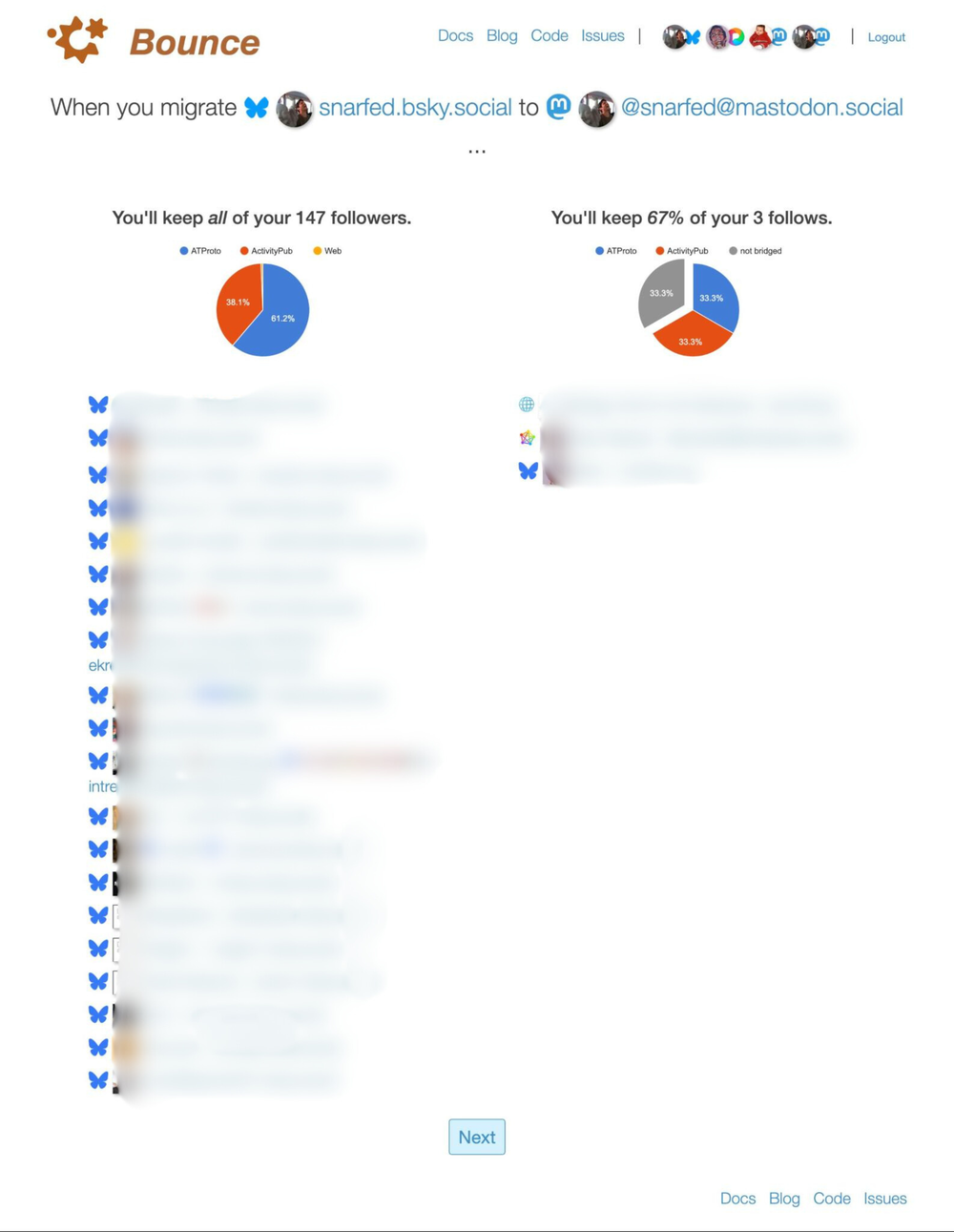
Not too long ago, I was inspired by Bounce, which gives people a way to move from Bluesky to the Fediverse and vice versa. It's a great tool and does some really clever things in the backend to make sure you stay connected with your friends on the other network. This lead to me thinking...why don't we do something like this for Facebook, and every other network?
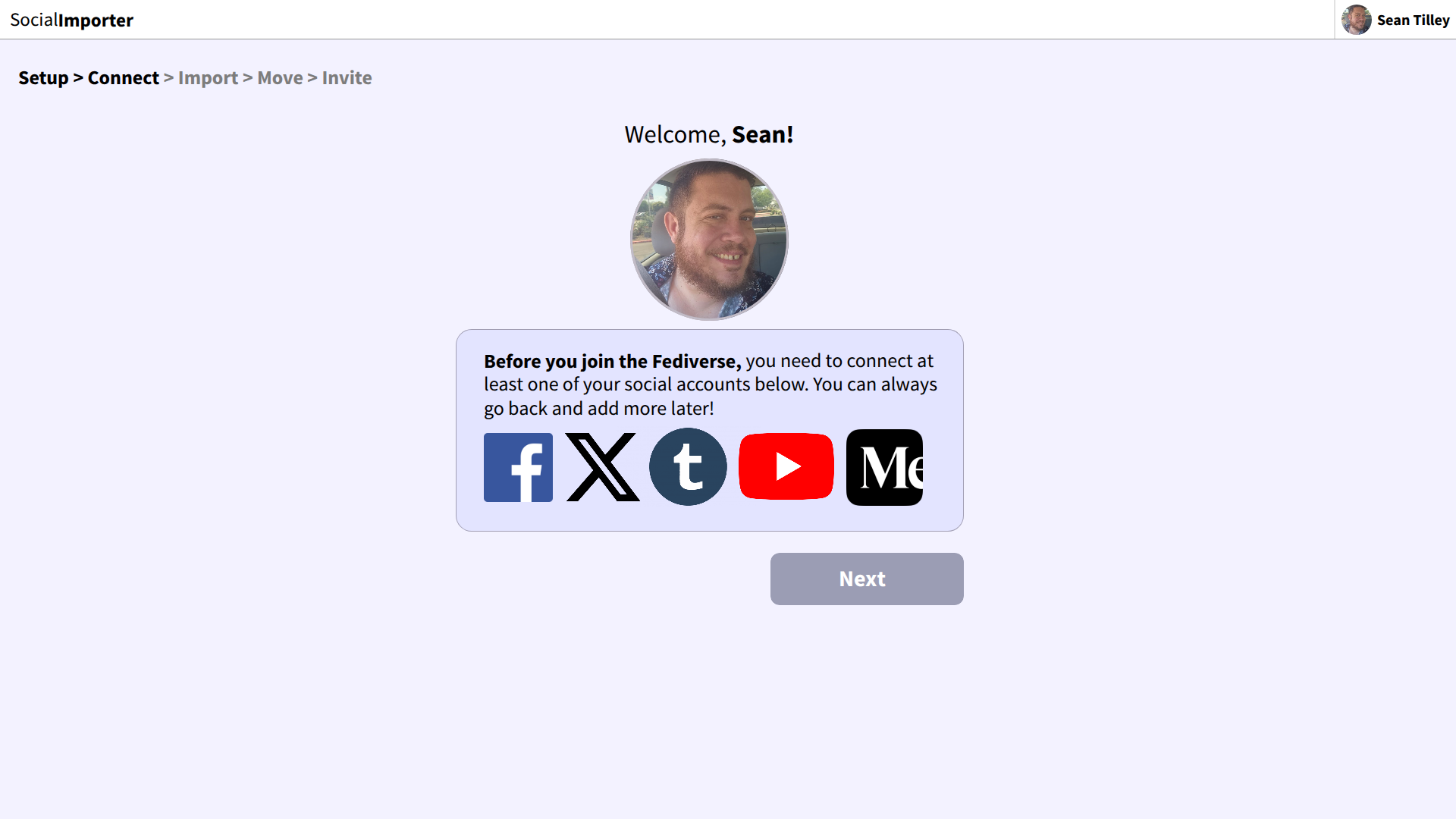
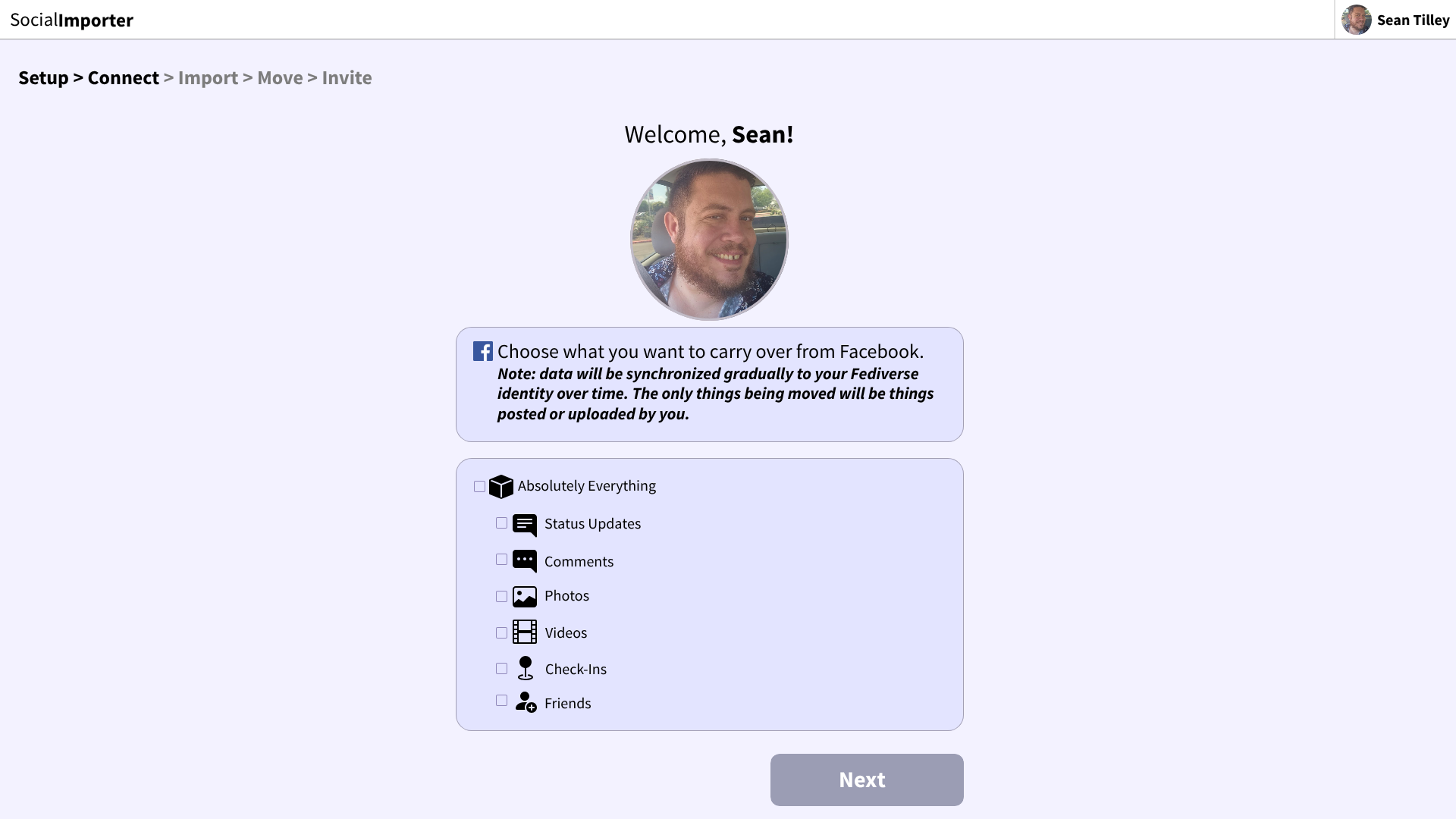
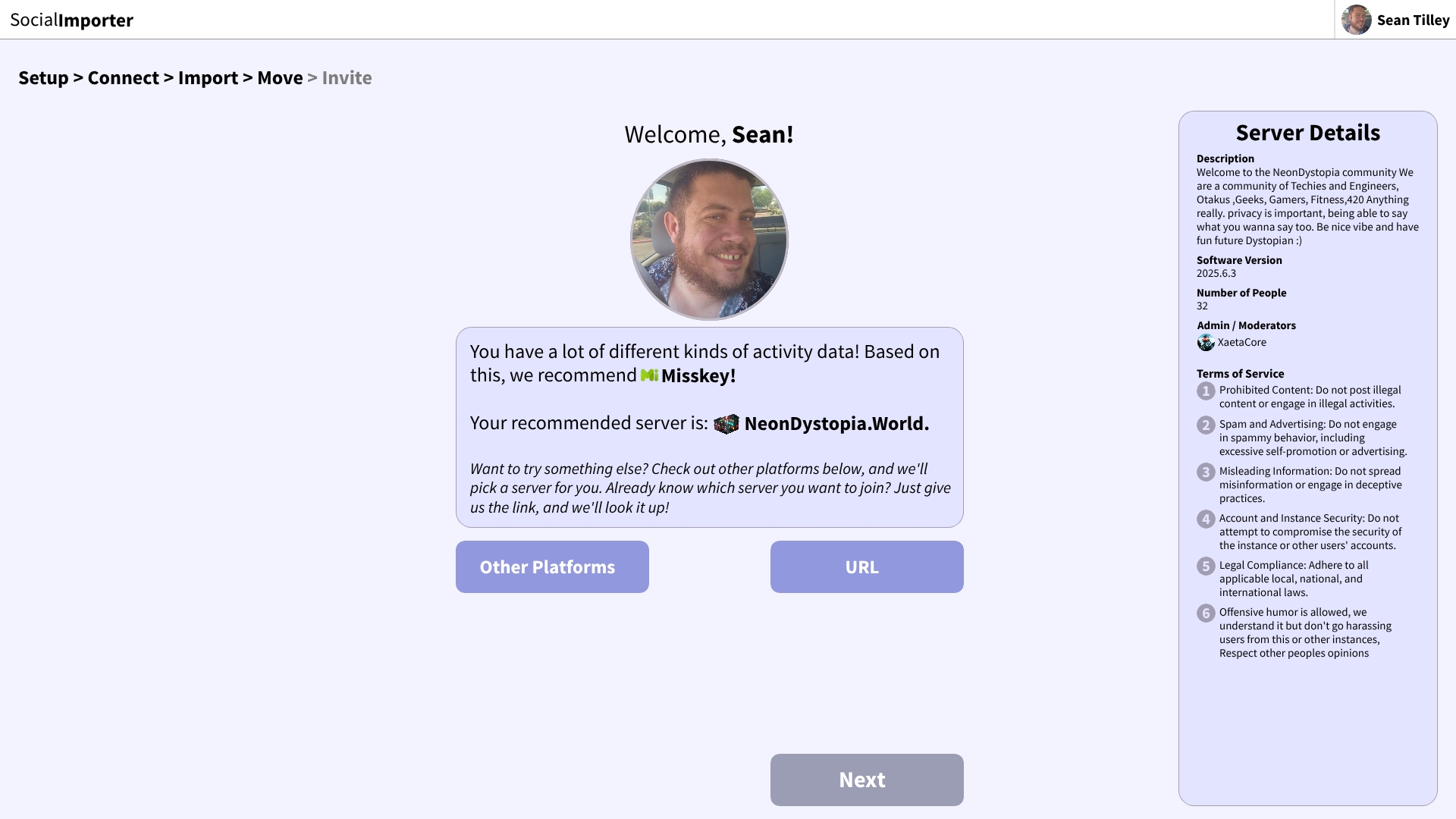
We could create a tool that's an essential part of user onboarding: offer a continuous sync of contacts, posts, and interactions. Do you have interactions from Facebook that don't exist on the Fediverse yet? No worries, we can backfill those later, and reconstruct the conversations in your old social graph. We'll even tell you about your friends who have already moved over.
Granted, not everyone is going to want to import their entire social archive over. However, being able to easily find your friends, or parallel accounts to Facebook pages you follow, would go a long way towards aiding discovery.
Idea #2 - Professional Hand-holding
Another way to tackle this problem would be to look at two very different places: at an organizational level, and at the individual level. This would require us to actually find people who are interested in alternatives to begin with.
For organizations, we could offer trainings and support to help teams get moved on to a new platform, with clear-cut instructions on how to do things. In addition, we could help social media teams get set up with Fediverse-compatible tools. Did you know that Buffer can post to Mastodon? Or that teams can self-host an open alternative like Mixpost to manage their operations? Some organizations might even go as far as wanting to launch their own social instances. Or maybe they just like the idea of having a blog that federates.
For individuals, we can do one better. Imagine if PeerTube or Loops had a strategy in place to reach out to prolific creators on YouTube or Tiktok, and were able to help those people get set up, import their media, and direct their existing followers towards these new platforms? Better yet, suppose we consulted these people on what they need out of a platform specifically? A fair amount of creators want their accounts to be set up for their own production teams. They want to focus on making videos and getting them out there to an interested community, and they want to direct people to donation links to help grow their channels.
Case Studies
I wanted to take a minute to focus on a few really interesting developments that I think play into what I'm describing. I'll try to keep it short and sweet.
Newsmast Foundation – Creating Community Apps
The first thing I really want to focus on is Newsmast, because I think they're solving a hard problem in a unique way. The organization has been developing special "white-label" Fediverse apps intended for specific community instances, such as toot.wales.
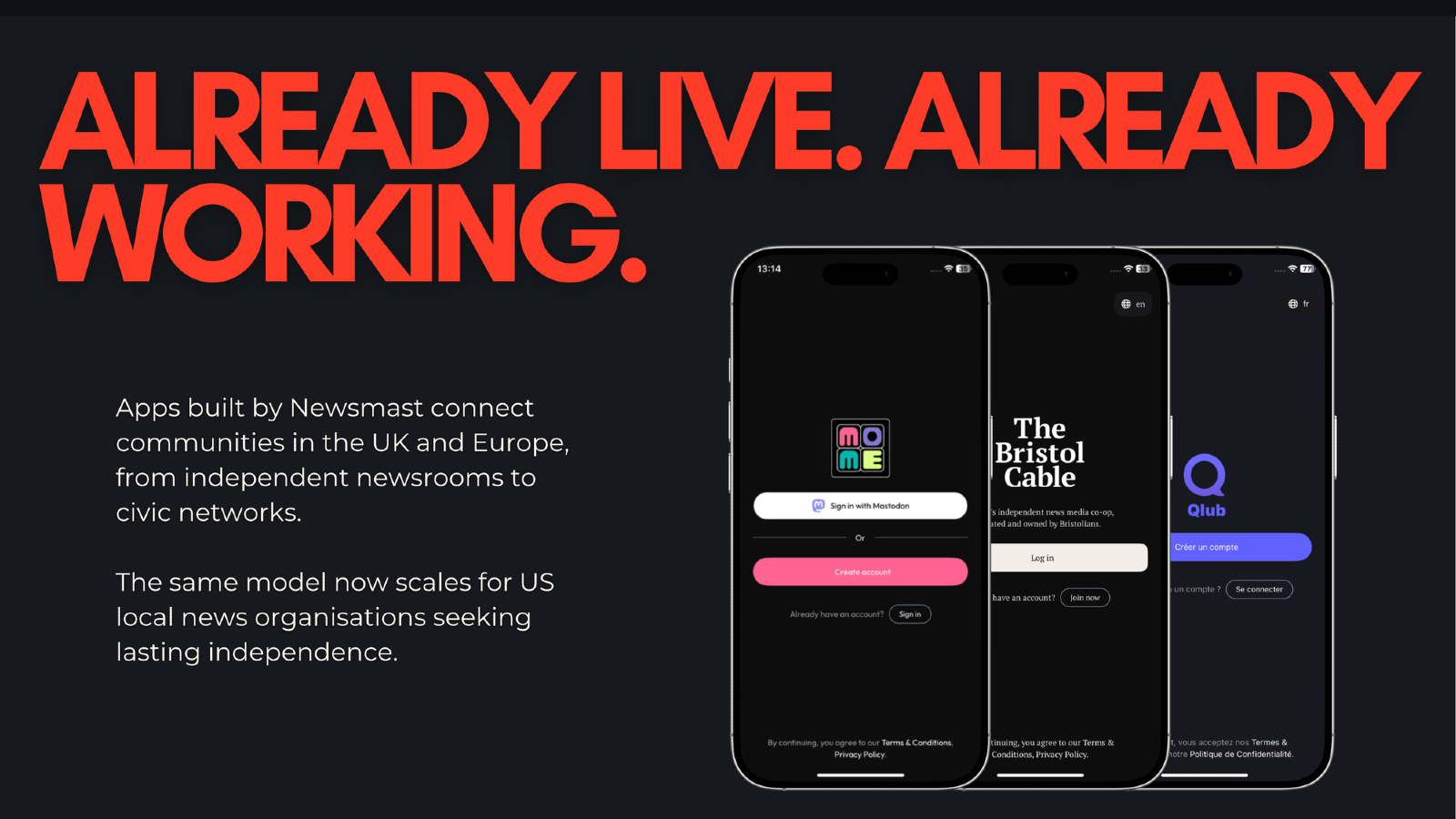 Source: Newsmast Foundation
By putting on a custom face and releasing it to app stores, Newsmast is solving a very specific discovery problem. Instead of saying "Connect with us on Mastodon", and making users join a new network and do that onboarding dance, they instead just reduce everything down to downloading an app and signing up. You're still joining the Fediverse, federation still works as advertised. You just get a sleek branded package.
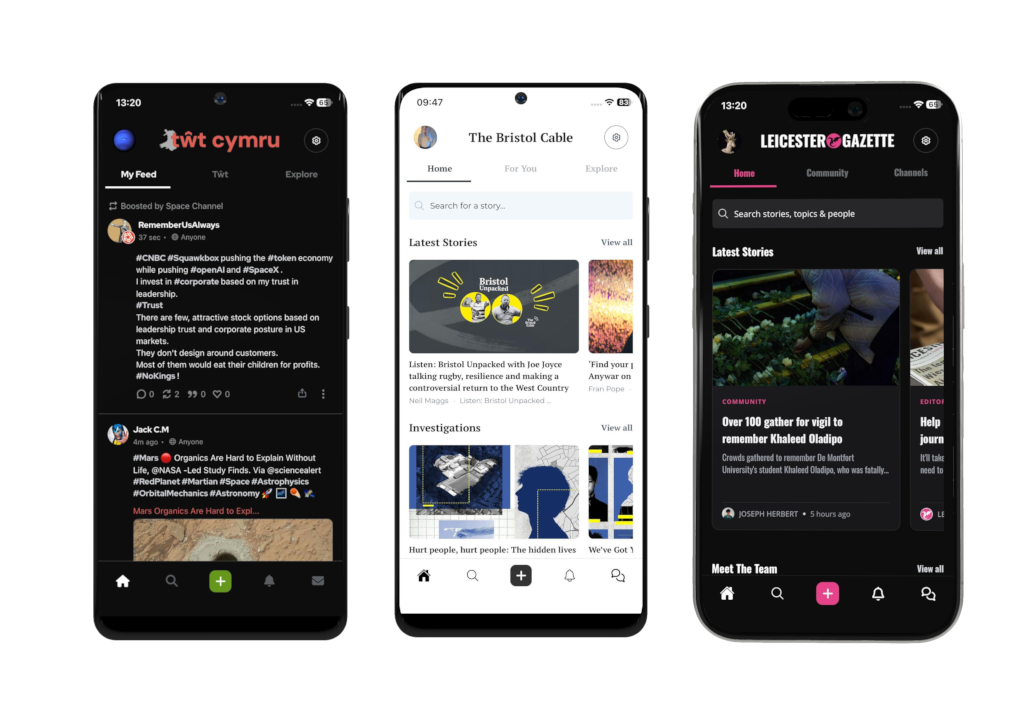 Source: Newsmast Foundation
What's really crazy is that some of their integrations go way past just setting up a Mastodon server. Some of their apps actually integrate right into the provider's website itself, thanks to a little bit of magic with ActivityPub integrations and custom feeds.
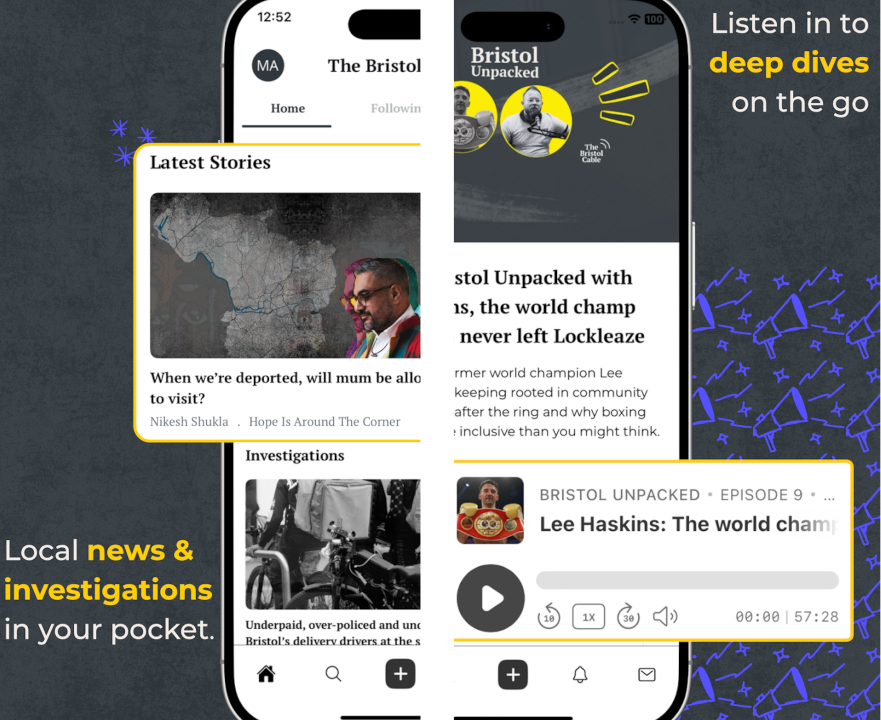 From the Bristol Cable App's Google Play page.
Newsmast is currently looking to expand beyond just Mastodon, and I think their partnership with Bonfire is going to be a big deal. Bonfire's whole thing is to be extremely extensible, and easy to customize. Maybe in the near future, these apps will support activities like Events, Groups, and more? For intentional communities, this could be huge.
A New Social – Bounce Migration Tool
A New Social is the nonprofit organization behind Bridgy Fed. Bounce is their newer migration tool, and it builds on top of Bridgy Fed to make it easy for people to move from Bluesky to Mastodon and vice versa.

While this might sound trivial on the surface, it's actually a really cool demonstration of how people can move their identities across different open federation protocols. There's a possibility for other protocols to gain support (both to Bridgy Fed and Bounce) in the future, but for now, they're working on making a robust product that's easy to use.
Hard Fork / Search Engine - The Forkiverse
 The Forkiverse's official banner. I love it.
A collaborative effort by two podcasts, Hard Fork and Search Engine, led to the launch of a new Mastodon instance called The Forkiverse, for fans and friends of both shows. Casey Newton, Kevin Roose, and PJ Vogt worked together to make this thing a reality, and have an active community that's part of the network. They told their audience about it, on a special episode.
The Fediverse ExperimentOur present version of the internet is arguably the worst it’s ever been. Which means – any shot at changing things, even an unlikely one – is worth trying out. Thr… Search Engine
What's crazy about this effort is that neither show is a small deal, when it comes to podcasts. Hard Fork is part of the New York Times, and Search Engine is said to be downloaded over a million times per month. These guys saw the Fediverse, liked what it was about, leapt in with both feet, and started a community.
Bonfire - Open Science
The Bonfire project is a bold, ambitious effort to build a highly-customizable Fediverse platform that can do it all. One of their main pilot programs has focused on creating a space for scientists, which has a number of specialized needs.
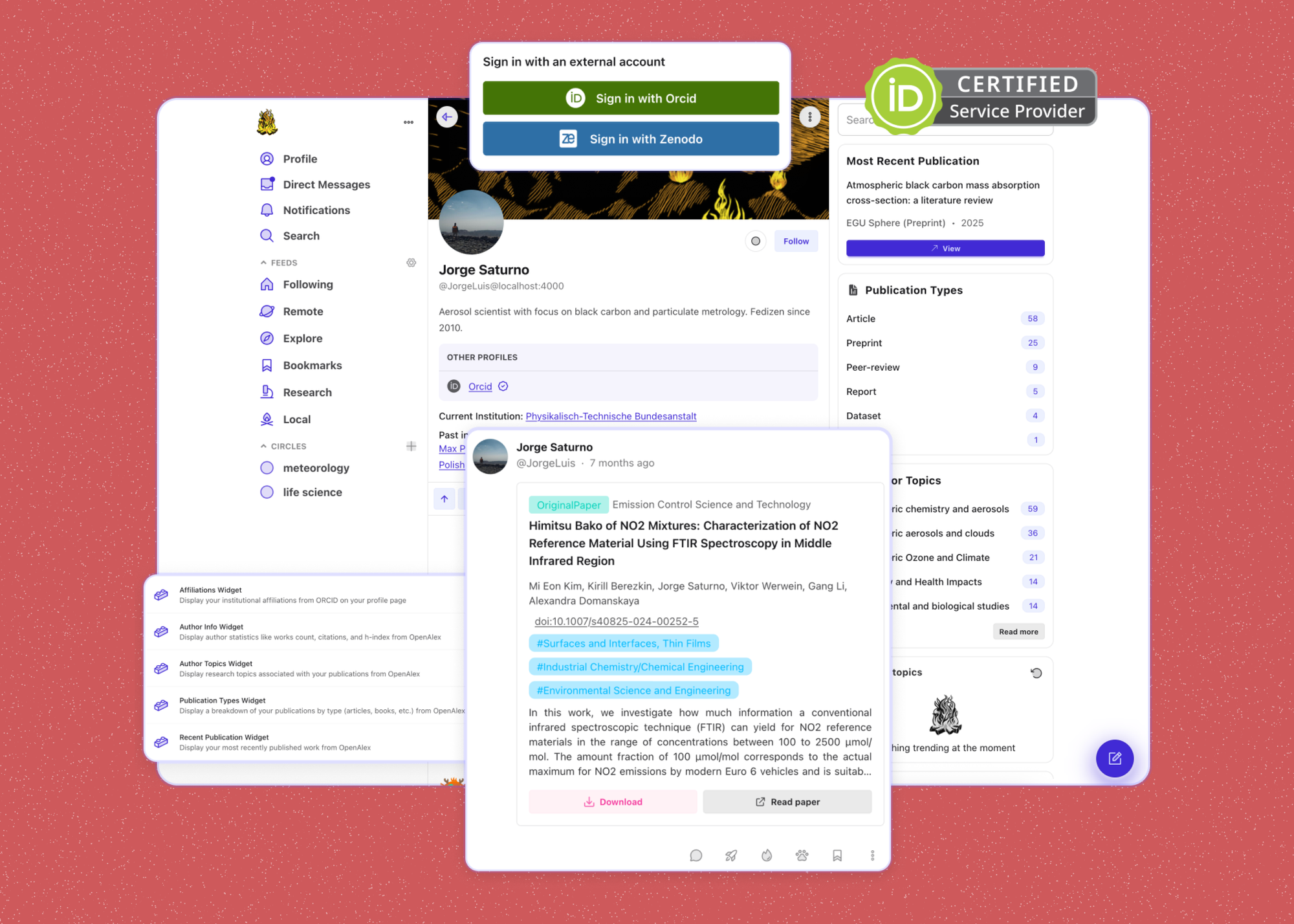 Source: Bonfire blog
After consulting with members of the pilot program, the Bonfire team launched a dedicated instance with a number of special features. For example: researchers can log in with their ORCID identity, and automatically import their publications, which gets appended to a special section of their profiles. Published works can be easily previewed and accessed directly from within Bonfire.
AltStore - Federated App Store
Although it's currently only available in the EU, AltStore is an alternative App Store where developers self-host their own apps on dedicated servers. In a sense, the app store itself allows users to add sources from developers, and get represented as ActivityPub actors.
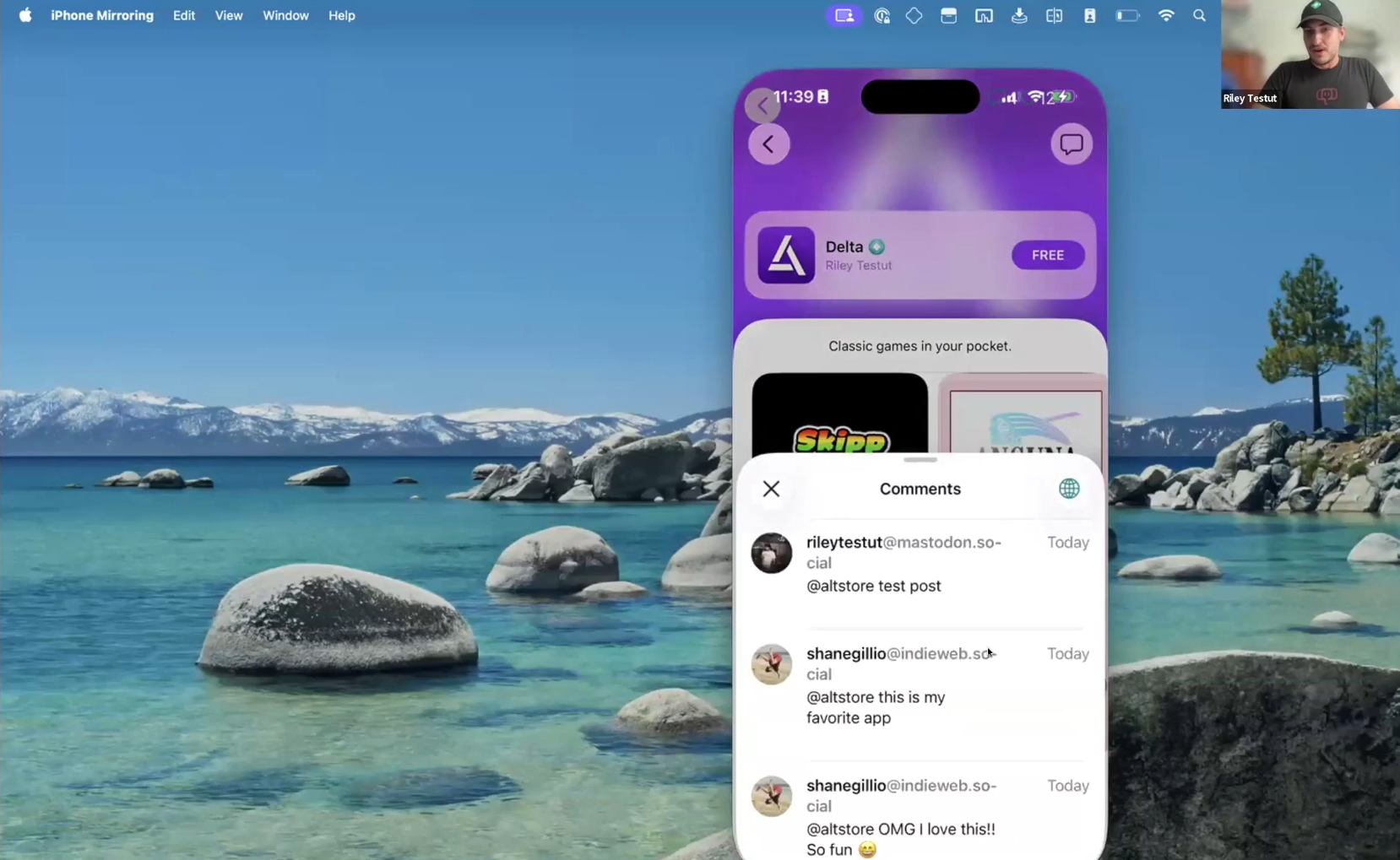 Source: FediForum Demo, "The World's First Federated App Store" by Riley Testut
What's really unique about this approach is that interactions on apps and updates can be seen by the wider Fediverse, and viewed inside of the AltStore app. While it remains to be seen as to what kind of impact AltStore might have in the future, this is a clear signal to developers that they can take part in the wider Fediverse ecosystem with very little effort.
TilVids – Bringing Creators to PeerTube
TilVids is kind of a big fish in a small pond. They have a number of YouTube creators mirroring their stuff directly onto PeerTube, with some of them even making exclusive videos just for the network.
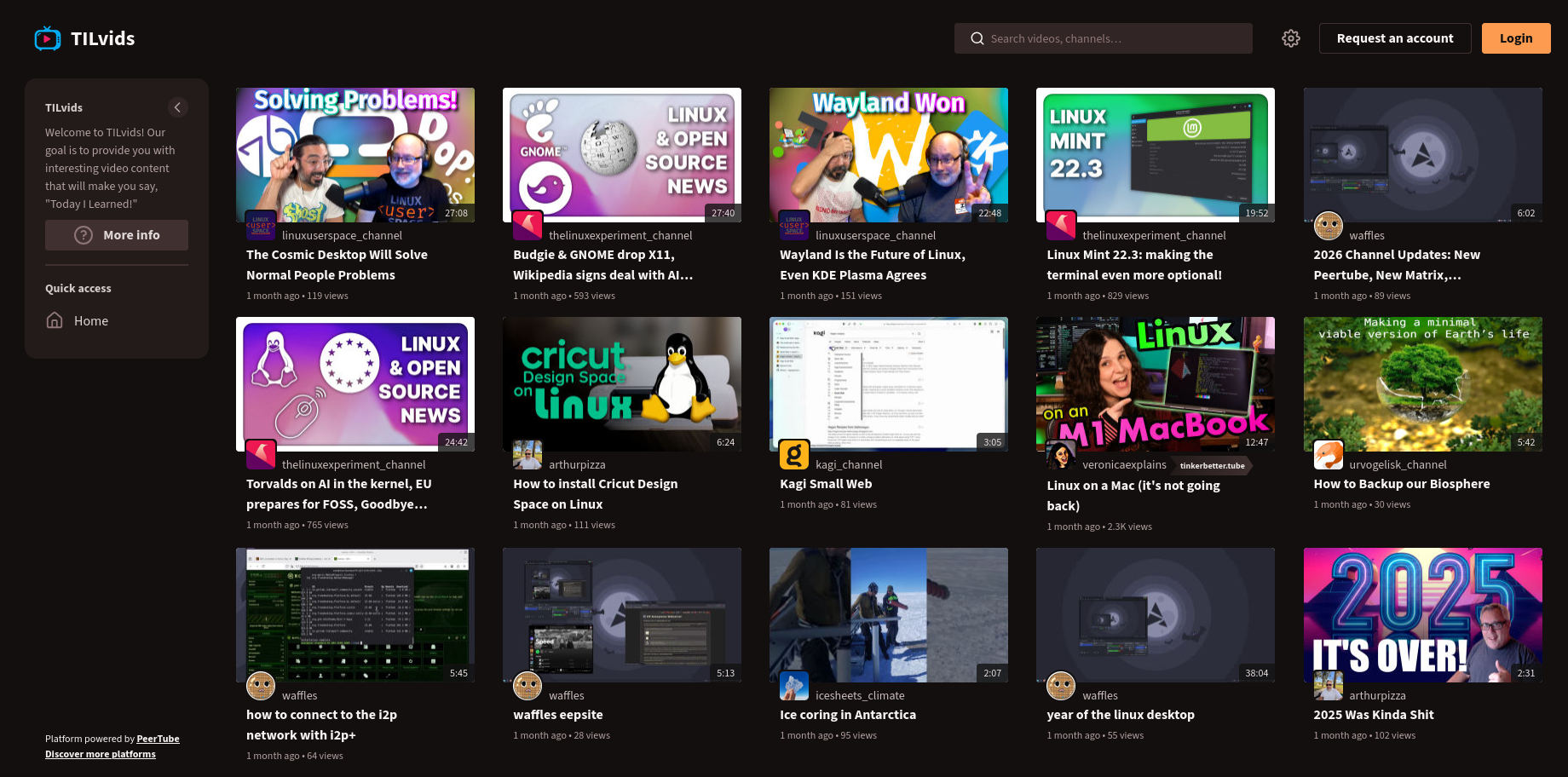
With a dedicated community of nearly 6,000 users, TilVids has made some pretty smart choices in reaching out to video creators across different popular niches, and have built a pretty thriving community around it. This has actually seen enough success that several creators are now hosting their own dedicated PeerTube servers, effectively creating affiliate networks.
In Conclusion
Advocacy for the Fediverse has to go beyond word-of-mouth, and grow past old ways of thinking about things. We need to attempt daring, bold new initiatives that focus on making the network accessible to newcomers, while finding new ways to serve communities. This requires us to think about a lot of different things, from messaging to presentation to distinct ways of solving problems.
I think the future of the network looks bright.
8
Great video showing how people are trying to take back the internet.
I messaged them directly to see if they'd be willing to go a step further and take back their content and socials as well, but we'll see.
If anyone is interested in doing the same, support@newpress.com
@nicol@social.coop Peertube servers can follow other servers. So if your server followed mine you can watch my stuff on your server, but I can't watch your stuff unless I follow you. There are exceptions and more options, but follows of servers seems to be the general way folks connect to each other.
You can follow servers directly or you can run an index that lists servers to follow.
I currently run, as well as host ptindex.btfree.org/ , a public index for folks to pull into their Peertube if they wanna follow what I do.
I was attempting to work on a script to help automate this a bit more, but got completely sidetracked.
3
@nicol@social.coop if you need ANY help in setting up Peertube, any questions, if you want to federate with me, just let me know!
Honestly MORE Peertube servers is only a good thing as far as I'm concerned.
And, yes, sadly, open signups are just trouble. Having even a few barriers to entry, while it does put off some, has helped me keep the server fairly easy to manage. Folks have to ask to get an account. Then I make them ask again for some storage. Then I monitor the videos they put up until I know we're all on equal footing and then let them upload whatever.
It's a lot of work, but there's only been 1 instance of someone attempting to post copyrighted content and I turned them away and they haven't come back.
I'm hoping to offer like 50GB free, and then $1/month or $5/month above that. That little bit of money, those hurdles, show that if someone wants to do that, they're wanting to be a member of a community and not just use us as a dumping ground for content.
5
ozoned
boosted

Today we're sharing the first in a series of three posts from our leadership team, starting with @mellifluousbox discussing our mission, and priorities for 2026. Stay tuned this week for more.
https://blog.joinmastodon.org/2026/02/connecting-the-world-through-thriving-online-communities/
28
ozoned
boosted

I am immensely grateful to the Fediverse for all the encouragement I got here to embark on a #selfhosting journey.
#YunoHost has empowered my digital life in immeasurable ways.
My way of giving back - and fighting the broligarchs of Big Tech - is to create a guide that demystifies the process. I have compiled all my posts so far in a single page:
🔗 : https://blog.elenarossini.com/a-newbies-guide-to-self-hosting-with-yunohost/
If you're curious about self-hosting but you haven't taken the leap yet, I hope my articles will be helpful to you ❤️
24
ozoned
boosted

Watch live!! 🌟 We are live for this week's band practice in our studio. We play some songs from our set and work on a song idea that our drummer wants to play guitar on. So let's see what happens 😁 Watch it on YouTube here https://www.youtube.com/watch?v=e4xC7Hjxyso&list=PLbvJrJ34c9Mmx4NdEKeYHSUJsVbO-gJvg
#LiveStreaming #bandpractice #alternativerock #bandstreaming #livestream
Weekly Band Practice: Have drums try guitar - Lorenzo's Music: The Live & Unfiltered Show - ep68
YouTube
ozoned
boosted

#ScribesAndMakers Have you ever or would you do your own cover?
Absolutely, and I quite like how it turned out: