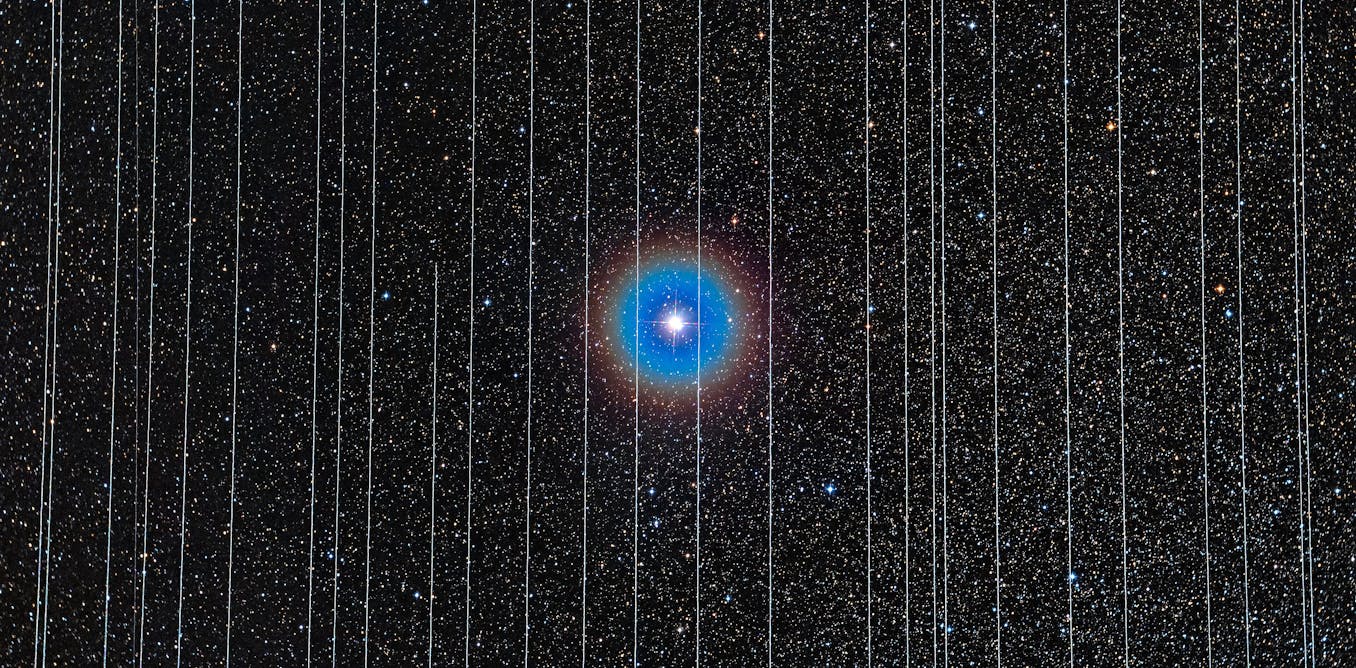
SpaceX filed an application with the US Federal Communications Commission for a megaconstellation of up to one million #satellites to power data centres in #space.
The proposal envisions satellites operating between 500 and 2,000 kilometres in low Earth #orbit. Some of the orbits are designed for near-constant exposure to sunlight.
The approval process for these satellites focuses almost entirely on the limited technical info companies have to submit to regulators.
Cultural, spiritual, and most #environmental impacts aren’t taken into account – but they should be.
At this scale of growth, the night #sky will change permanently and globally for generations to come.
In 2021, astronomers estimated that in less than a decade, 1 in every 15 points of light in the night sky would be a moving satellite. That estimate only included the 65 000 #megaconstellation satellites proposed at the time.
Once deployed at a scale of millions, the impacts on the night sky may not be easily reversed.
#astronomy
https://theconversation.com/too-many-satellites-earths-orbit-is-on-track-for-a-catastrophe-but-we-can-stop-it-275430